Thursday, December 6, 2012

Will Low-Power FM Stations Help Local Music?

On Air image from Bobby Owsinski's Music 3.0 Blog
While radio is decidedly old school media, it's still utilized a lot more than you think. Traditional radio is listened to more than twice as much as its online counterpart, and it's still perfect for breaking news, sports, and general car-based entertainment. The problem is that the programming has regressed over the years, especially when it comes to music. Where radio was once vital with local sounds, now you have a certain sameness to the playlists across the country thanks to the homogenized bottom-line-first programming of the station groups that own most of the stations.

It's possible that might change a little, thanks to an unexpected ruling by the normally staid Federal Communications Commission. Yes, that same FCC that has been afraid to peek into the future lest they step on the toes of big broadcasting has given us at least the possibility of something to cheer about and it's called Low Power FM (LPFM).

Originally sanctioned in 2000, LPFM has a maximum of 100 watts and a broadcast radius of 3 miles, but thanks to the lobbying efforts by Big Broadcast, the application process wasn't particularly easy. In fact, only a single LPFM station has been commissioned since then, and the majority of applications were by entities speculating on the popularity of holding a license and cashing in, rather than building stations.

The new FCC ruling set out a streamlined process that limits the applicants to only those that will actually build a station, and eases some of the bandwidth restrictions that Big Radio insisted on to protect their turf. This will all take place next year when the new application process go into effect.

What are the implications of LPFM? Maybe none, maybe a lot. It's been proven that radio is only as good as it's programming and talent. An LPFM station probably won't have much of either, just like college radio (the poster child for low-power radio). That said, it's also not obligated to a corporate playlist, so it's possible to finally have a return to an open playlist like the glory days of early-FM in the 70s (how I long for those radio days). Back then, you never knew what you'd hear next, but if you liked the DJ, you knew you'd probably like what he or she played. With no big money involved, we can only hope that some experimentation will be in order with no reason to focus on the the lowest common denominator dictated by the marketing department.

While we can't expect LPFM to change the broadcast world, it would be nice if we had some local alternatives, even if their reach is only 3 miles. Hyper-local radio is target at your community. The question is, will your community listen?

----------------------------------

You should follow me on Twitter for daily news and updates on production and the music business.

Check out my Big Picture blog for discussion on common music, engineering and production tips and tricks.

Wednesday, December 5, 2012

10 Creative Rules Of Thumb

Here are some great tips on how to stay creative that that have been floating around various blogs for a while. Regardless of who created the list, it's still pretty good advice and something I wish I would refer to more often myself. Take a look:

Top 10 Creative Rules of Thumb:

1. The best way to get great ideas is to get lots of ideas and throw the bad ones away.

2. Create ideas that are 15 minutes ahead of their time…not light years ahead.

3. Always look for a second right answer.

4. If at first you don’t succeed, take a break.

5. Write down your ideas before you forget them.

6. If everyone says you are wrong, you’re one step ahead. If everyone laughs at you, you’re two steps ahead.

7. The answer to your problem “pre-exists.” You need to ask the right question to reveal the answer.

8. When you ask a dumb question, you get a smart answer.

9. Never solve a problem from its original perspective.

10. Visualize your problem as solved before solving it.


----------------------------------

You should follow me on Twitter for daily news and updates on production and the music business.

Check out my Big Picture blog for discussion on common music, engineering and production tips and tricks.

Tuesday, December 4, 2012

Sometimes Big Promo Doesn't Work

Michael Jackson
More and more, music mass marketing is working less and less. This is especially true for television, where once upon a time, an appearance on a popular show could mean a huge jump in sales. Take for instance an appearance on Saturday Night Live, which could mean at least 100,000 in sales; sometimes even more back in the good old days of limited media. This is becoming less and less the case however, as we get further into Music 3.0 where consumer's listening, watching and buying habits are dictated by the time they spend online.

Probably the best example of how little impact television can have came recently with the airing of Spike Lee's documentary of the making of Michael Jackson's Bad. This was basically a 90 minute commercial for the re-issue of the album during prime time of one of the best television viewing nights of the year, and it sold only 11,000 albums the next week as a result.

Let's go over that again - Michael Jackson, big album, Thanksgiving evening, 11k!

The worse thing is that it was a really great program, showing another side of Michael that few have ever seen, along with much of the backstory of the making of a big-selling album. Granted,  the record is 25 years old and MJ's music isn't currently hot, but it would have been interesting to see if a similar show on Justin Bieber or Lady Gaga (or even Psy for that matter) would've done any better. Maybe a bit, but I doubt it.

Several things are changing at once here. Television is losing it's impact, and people are getting more used to subscription music instead of buying it. I bet a lot of the audience that were motivated to listen to MJ afterwards just fired up Spotify or Pandora or Grooveshark or ..........

The fact of the matter is that I think more copies of Bad might've been sold with an online marketing campaign, and it would've been a  lot cheaper.

The estate of MJ no doubt made some big dollars from the network, but the show just proved that we're in a state of evolution in all media. Hang on for ride!

----------------------------------

You should follow me on Twitter for daily news and updates on production and the music business.

Check out my Big Picture blog for discussion on common music, engineering and production tips and tricks.

Monday, December 3, 2012

5 Aspects Of The New Music Reality

Reality Check image from Bobby Owsinski's Music 3.0 blog
During lunch with a friend today, he passed some scenarios by me for breaking a new act. One of the things he said seems to be what's now seems to be accepted industry knowledge, although I believe the logic is faulty.

"We're going to do vinyl and digital downloads but skip the CD. They're done." After discussing for a while what he was going to charge for the items, I told him my feelings on the matter.

1) Hoping to make money on any kind of music isn't living in reality, especially for a new artist that no one knows. That business model is dead and gone, even for all but the 1% (or less) of established artists.

2) Give your music away. That's what it's worth to most consumers - zero, nada - especially if they're not your fans. Music always has been a promotional tool for the artist, and the record label made most of the money anyway. Once you get over the idea that you can make money from the sale of your music, your mind will be free for other possibilities that can be monetized.

3) CD's aren't dead yet. They're a collectible, the same as a shirt or hat, and that's how they should be should be thought of. The fact is that they're not the be-all, end-all to monetizing your brand, and they really never were. Remember that there were 248 million CDs sold in the US last year that were counted (many sold at concerts don't hit Soundscan), so there still is a demand. You just have to adjust your thinking on the type of product it is.

4) But you can charge for a collectible. A collectible is a memento of a moment in time, and people will pay to relive that through an item that they'll buy. But you can't charge too much.

One of the problems with most bands and artists is that they price their swag way too high. Who pays $10 dollars for a CD these days? Who's willing to pay $20 for a T-shirt? Even legacy artists with a really great brand and nicely designed merch can have a problem at $35, which has become the norm at a concert.

Find out your costs, including tax, shipping, the commission you give to the swag salesman, and everything else that might be hidden, and mark it up by 20% - 25% to build in some margin. Especially if you're just starting out, think of these items as promotional. The fact that you might get someone to cover your costs by buying your merch, and even make a little as a result, is a bonus. You can charge more later once you develop a rabid following that wants everything ever connected to you, and you've proven that the market will bear the higher price.

If you're audience wants CD's (some still do, believe it or not), pull a Radiohead and let people pay what they want for them, or set the price extremely low so you can at least cover your costs. Once again, it's promotion. I'd rather people pay at least something because that way they've made a commitment to listening to it. A CD given away for free will most likely hit the garbage before it ever hits their ears.

As far as digital downloads, give them away for free on your website, and charge for them on iTunesAmazon and all of the streaming networks too. Study after study has found that downloads sell better when they're available for free, as weird as that sounds.

5) Don't buy inventory. The days of order 500 or 1000 of anything are over. Get just enough to have a few on hand (like 10 or so), and order anything else on a as-needed basis. For CDs, you can order from 1 to 100,000 for a fixed fee of $1.75 from Kunaki.com. For all other merch, you can do the same at Zazzle.com or Cafepress.com.

We're living in the age of Music 3.0. It's time to take advantage of it.

----------------------------------

You should follow me on Twitter for daily news and updates on production and the music business.

Check out my Big Picture blog for discussion on common music, engineering and production tips and tricks.

Sunday, December 2, 2012

7 Ways To Optimize Video For Facebook

Facebook Video image from Bobby Owsinski's Music 3.0 blog
Although people love posts with pictures on Facebook, posts with videos receive far fewer Likes or comments. Here are 7 quick tips  from Jackie Cohen at AllFacebook on how to optimize your videos just for Facebook. I've adapted them a bit more for artists and bands.

1. Limit the video footage to 5 minutes or less (way less). The shorter the video, the more plays you'll get. A long video can scare off people who might ordinarily check it out.

2. Create a good thumbnail image for your video. A good thumbnail is like a good cover of a book. It helps get an impulse "buy."

3. Create a catchy or unique title. Just like with a book or magazine article, the title can sell the product.

4. Check out the keywords for similar videos. For example, if your song has a drum solo, you might want to check out what keywords other videos other songs with drum solos use as well.

5. Allow people to share your work. This sounds like a no-brainer, but many artists actually limit the sharing of their video. Let them embed your video on their blog and website if they want. That's how you go viral.

6. Encourage people to rate and review your video. Don't directly ask for a Like, since that's against Facebook's terms of service, but you can ask for comments or a rating.

7. Upload to other video sharing sites. Use OneLoad to post your video on all relevant video sites. It's the quickest and easiest way to do it, and you'd be surprised the number of people who might find it that wouldn't otherwise.

Keep the above tips in mind the next time you post a video on Facebook. They don't take much time but can make a big difference in the number of views that it ultimately receives.

----------------------------------
Help support this blogAny purchases made through our Amazon links help support this website with no cost to you.

You should follow me on Twitter for daily news and updates on production and the music business.

Check out my Big Picture blog for discussion on common music, engineering and production tips and tricks.

Thursday, November 29, 2012

Stars Make The Big Mistake Of Not Going Digital

Kid Rock Rebel Soul image from Bobby Owsinski's Music 3.0 blog
It seemed like a good idea at the time to be a holdout from going digital, but now it looks like AC/DC and Kid Rock are paying the price. Two of the longest digital holdouts are meeting with only modest digital download success now that consumers have started to tip toward streaming, and it looks like the window for some real revenue from digital might have passed them by.

Take AC/DC. While the video of the band's Live At River Plate hit #1, their first album (of the same name) debuted at only #66 on the iTunes store. That said, since the band recently released their entire catalog to iTunes, 13 of their songs have entered the 200 song Hot Digital Songs chart. This sounds like a lot until you see that the classic "Back In Black" is the biggest seller at only 68k, and the album of the same album sold only 15k this week, which is a drop in the bucket to the big sellers of the day. You have to think that if they had done this any time in last 3 years that they may have had more success.

Kid Rock's first digital album Rebel Soul is doing better, debuting at #5 and selling 146k total copies, but only 57k of those are digital. The problem is that amount is less than his the debuts of his previous 3 albums, even with the digital element now attached. The interesting thing here is that KR really missed out on the digital scene by waiting, proven by a cover band called Rock Heroes selling 1,647,000 digital copies of his 2007 hit "All Night Long," which would've meant about $330k of revenue that he missed out on right there.

Once again, this proves the point that you can't sit on the sidelines while technology passes you by, especially in music. Both Kid Rock and AC/DC didn't do themselves any favors by doing so, although they probably thought they did the right thing at the time. Remember the mantra; your music is your marketing. The more that's out there, the better off you are, even if you're AC/DC.

----------------------------------
Help support this blogAny purchases made through our Amazon links help support this website with no cost to you.

You should follow me on Twitter for daily news and updates on production and the music business.

Check out my Big Picture blog for discussion on common music, engineering and production tips and tricks.

Wednesday, November 28, 2012

3 Million Plays = A $39 Royalty Check

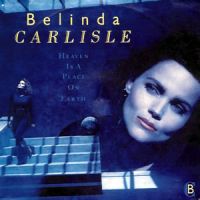
Heaven Is A Place On Earth cover image from Bobby Owsinski's Music 3.0 blog
As artists and songwriters continue to discover, streaming music doesn't throw off as much money many thought it would. One of the big problems is that after what seems to be an enormous number of song plays, the royalty is incredibly meager. You hear different examples of this every day from outraged artists and songwriters, the latest being Ellen Shipley in a post last week to Digital Music News that you'll find below.
"My Song Was Played 3.1 Million Times on Pandora. My Check Was $39...
Tuesday, November 20, 2012
by  paul 
The following comment, posted on our site [Digital Music News] Tuesday, comes from Grammy-nominated, hit songwriter Ellen Shipley. One of her top tracks, "Heaven Is a Place On Earth," [the 1987 hit by Belinda Carlisle] got played more than 3.1 million times on Pandora, in the last three months alone. Here's the rest...    
It is interesting and very disturbing that no one is addressing the SONGWRITER's situation in this Pandora debacle.
Pandora wishes to REDUCE the amount of royalties that songwriters have already seen CUT in 2005. Let me give you an example of what Pandora is paying in royalties to SONGWRITERS--not the performers, but the people who write the songs--the foundation of the music world--- 
PANDORA ----"Heaven Is A Place On Earth"  (co-written)
accounting period for 3 months-----3,112,300 streams
My Pandora royalty .................$39.61 
AND they want us to take an EIGHTY FIVE PERCENT CUT!!!  
Does that give you an understanding of the meager, insulting, outrageous amount of money songwriters are being paid from PANDORA and SPOTIFY and YOUTUBE and GOOGLE  (I received 15 cents from GOOGLE the other day)? 
PANDORA talks a great deal about their need to make a profit and to survive.... but they could care less about the fate of those creators who already are hurting so badly, they are dropping out of music. 
FACT:
According to the FEDERAL CENSUS, we have lost 45% of our professional songwriters in the last ten years or even less (since the advent of streaming and piracy on the Internet depriving us of earning our LEGAL royalties) 
So--here is the question:
WHY is it alright for PANDORA to want to exist and grow and earn profits while it is NOT alright for the SONGWRITERS to SURVIVE, be respected, earn a fair royalty?
PANDORA's model is failing-- because as Steve Jobs recognized much earlier on when he rejected the idea of Streaming Digital radio--they don't have a business plan that gives them a way (such as ad revenue) to earn a profit OTHER THAN NOT PAYING FOR MUSIC! 
Listen Up Everyone Please:
Without the Songwriters who create music for artists who do NOT write their own songs, there will be little if any music when you go to PANDORA OR SPOTIFY OR YOUTUBE....
I am grateful for my success as a Grammy-nominated, hit songwriter....I am grateful that my songs have reached millions of people and meant something to them in their lives....
But I will NOT perpetrate the myth that somehow Songwriters should give their music away for free or let it be stolen by Corporations interested in their own profits by any means possible.
THis is a human rights issue---We are discriminated against and unprotected by the US governments obligation to make sure our FIFTH AMENDMENT RIGHTS in the BILL OF RIGHTS (the "right to the pursuit of happiness" which includes the right to work at the JOB OF OUR CHOICE and earn an income from that job without--my words- interference from any person, place, corporation, streaming sites that are robbing us of our Constitutional rights. 
Let the voice of the Songwriters Be Heard!  Send a petition tous--allow us to be represented at all these meetings between the music world and those who would seek to destroy what we have worked so long and hard to achieve in our lives. 
Ellen Shipley"
Ellen has every right to be outraged, but it seems that her anger is a bit misplaced. She's a BMI writer and her check came from BMI, not Pandora. It was BMI who made the licensing deal with Pandora and BMI who determined how much her streams were worth in the grand scheme of things, given the amount of licensing money they received. Then they split the money 50/50 with Ellen and her publisher after taking an administrative fee. Some of her beef should be with BMI for the deal they cut.

OK, that still doesn't negate the fact that 39 bucks isn't that much for 3 million streams. And of course, the fact that Pandora wants to reduce that amount even further to stay in business just inflames the situation. But the fact is that songwriters have been used to making more money from terrestrial radio play for a long time, but the pool of money for online radio just isn't that large right now, at least for Pandora.

That said, Pandora says that it can't stay in business without a license rate reduction, but maybe it's better for normal market evolution to take its course and let it die, just like any other business that has the same income to expense problem. If there's a real need in the market for such a service (and Spotify can't fill it all), then you'll see someone rush in to fill the gap in no time, perhaps with a business plan to make it work better for all involved.

----------------------------------
Help support this blogAny purchases made through our Amazon links help support this website with no cost to you.

You should follow me on Twitter for daily news and updates on production and the music business.

Check out my Big Picture blog for discussion on common music, engineering and production tips and tricks.

Tuesday, November 27, 2012

How To Get Your Band Booked

Club Band image from Bobby Owsinski's Music 3.0 blog
You want to get your band gigs, right? You don’t know how to do it, right? Here’s an excerpt from the “Stage Time” chapter of the band improvement book “How To Make Your Band Sound Great” that gives you the inside scoop on the things that club promoters love and hate the most to help you get your band booked. Although the following (which originally came from Memphis promoter Chris Walker) pertains mostly to bands that play their own music, there are a few items for cover bands to think about as well.

"First of all, most bands will put a press package together to give to a promoter, booker or club owner and most of them make the same mistakes. Here are the things that a promoter or booker does not care about:
  • Who you've opened for or played on a bill with. Nobody cares. Opening for someone famous doesn’t automatically mean that you’re any good. It’s only name dropping.
  • Who produced your record. Once again, this is not an indicator of the quality of your band. If the producer’s really good, he could’ve easily tweaked or sweetened a mediocre performance or even brought in session musicians. And he could've been paid a bunch of money to do it, so his presence on the project doesn't amount to an endorsement.
  • How well you do in your hometown. You might have a lot of friends that like to hang out with you but it doesn’t mean that they’ll follow you when you play farther away from your home base or out of town. It also doesn’t mean that you can draw anywhere else.
  • Press clippings. You wouldn't send out negative reviews, would you? Of course not. No talent buyer looks at press clippings because they all know what they're going to say. "This band is wonderful. Coldplay, watch out!"
  • How good you are. Of course you think you're good. Your music is probably your life. Guess what? It's just another band setting up and making a racket to the club staff. Hard to believe, isn't it?
  • What you sound like. The only reason the venue cares what you sound like is because they don't want to mismatch music genres or book the wrong type of music altogether. Other than that, they don’t care.
Nothing listed above answers the most important question a talent buyer has, which is: HOW MUCH MONEY WILL THE VENUE MAKE IF YOU PLAY HERE?

Always ask yourself that question when approaching a talent buyer regarding a show. Of course, the answer is to draw a crowd. You’ve got to draw some people or your gigging life will be over. Beg your friends to show up. Facebook the heck out of your show. If the venue can count on you bringing 20 to 40 people a show, you'd be amazed how often people will ask you to play.

So what do you have to do to get gigs? Try the following:
  • Develop a draw in your hometown. That means you should play about once every month to 6 weeks. Don't play too much more than that since overexposure will kill your crowd, and you need your crowd to keep coming so you keep getting asked back.
  • If you haven't left your hometown and you don't have a record, your only hope is to trade shows. Why develop a draw at home? So you can trade shows with bands from out of town. Just be sure the band you're trading shows with has a draw in their hometown. Check that city's music message boards. Use the many avenues of the internet. It's your only hope.
  • Be your own promoter. Actually save up your own money and book as big an artist as you can afford in the club you want to play, then stick yourself on the bill. It's a perfect way to find out if you're worth your salt."
If you want to get gigs (and who doesn't), keep the above items in mind before you spin your wheels trying the same old things that everyone tries to get gigs.

----------------------------------
Help support this blogAny purchases made through our Amazon links help support this website with no cost to you.

You should follow me on Twitter for daily news and updates on production and the music business.

Check out my Big Picture blog for discussion on common music, engineering and production tips and tricks.

Monday, November 26, 2012

Why "Gagnam Style" Is The Most Viewed Video Of All Time

Psy "Gangnam Style" image from Bobby Owsinski's Music 3.0 blog
It was reported over the weekend that Psy's "Gangnam Style" video had surpassed Justin Bieber's "Baby" for the most viewed ever online with over 806 million views. Think of that - 800 million views! There's been a lot of analysis as to why "Gangnam Style" became the video sensation that it is, from humor to explosions to kids to sexy girls to the dance (all true), but I have another take on it from a more macro perspective.
  • There's a bigger online audience: The world is much more connected than any other time in history. As a result, there's a bigger potential audience for a phenomena like "Gangnam Style." You'll see this viewing record broken the next time a similar sensation takes place.
  • He came from a different part of the world: Most huge trends like this tend to start in the US, but in this case, the US was only icing on the cake. With Psy being Korean, "Gangnam Style" broke out from the East and headed West, rather than the other way around. It was already huge by the time North America got hip to it, but what put it over the top was..........
  • Exploitation: The fact that Scooter Braun, Justin Bieber's manager, got involved sent Psy and "Gangnam Style" to another level. All of a sudden, Psy was on every television show you could think of, from Saturday Night Live to the MTV Video Music Awards to the Today show to name just a few. With these appearances, he jumped generations from K-Pop (Korean Pop) to seniors dancing to it at the local rec center. As with most artists, management is still the key.
After another single or two you may never hear from Psy again as he goes the way of the Macerana, but you can be sure that you'll see something like this again probably sooner than later.

By the way, "Gangnam Style" also holds another distinction. It has the most likes of any video with more than 2 million. Beiber's "Baby" comes in 3rd following the 1.6 likes of LMFAO's "Party Rock Anthem."
----------------------------------
Help support this blogAny purchases made through our Amazon links help support this website with no cost to you.

You should follow me on Twitter for daily news and updates on production and the music business.

Check out my Big Picture blog for discussion on common music, engineering and production tips and tricks.

Sunday, November 25, 2012

10 Things That Can Destroy An Email Marketing Campaign

email newsletter image from Bobby Owsinski's Music 3.0 blog
An email newsletter is much more important than most musicians think. It's easy to get coddled into thinking that social media is all that you need to stay in touch with your fans, but study after study reveal that when it comes to marketing, your email newsletter is your most effective tool. That said, there are right and wrong ways to do everything, and an email newsletter is no exception.

Here's a great post from clickz regarding the 10 things that can destroy an email marketing campaign, and how to fix them.
"Your consumers are in complete control. They are empowered by their choices, with their devices, and have the ability to leave you with a click of a button. Here are 10 things that concern them and can force them off your list.
1. They do not remember who you are. This can easily happen if you do not send them their first message quickly or let a lot of time lapse between messages. If your branding is not clearly defined, it is going to be harder for the consumer to recognize you.
Rx: Send the first message quickly, stay in touch, and keep reminding the consumer about your value proposition.

2. You send them too many campaigns. When the consumer signed up you may have promised them a message a week, important updates, or emails tailored to their preferences. Your campaign frequency has now gone up significantly.
Rx: Cap your frequency to match your consumers' preferences, and if they do unsubscribe, offer to reduce the frequency to a minimum.

3. Your emails are just not interesting. If the consumer considers your campaigns to be boring they are going to lose attention quickly.
Rx: Spice it up a bit, even if you are talking about "ball bearings." Factor in some user-generated content or questions - this is what will keep the consumer engaged.

4. You do not stop selling. I once opted in to receive emails from a financial institution to learn more about their loan instruments. I even opened an account. The nurturing campaign turned to an aggressive selling campaign, forcing me to get off their list.
Rx: Mix up your messaging; the best thing might be to include useful informational content in every marketing campaign.

5. You are not relevant. Many times, we are so influenced by the merchandising or information calendar that we forget what the consumer's preferences are. We either forget that the consumer has already purchased a particular product or target her with things that she has no interest in.
Rx: While it would be ideal to segment the consumer based on her preferences, keep asking the consumer if you are missing the mark and factor in her comments into your marketing campaigns.

6. You expect your consumers to test your content. How many times have you received an email where the images are broken, the formatting is messed up, or worse yet, the landing page takes you to the land of nowhere?
Rx: Test your campaigns internally and then test them in a control group. Only then should you release them to the entire list.

7. It takes too long to load. If you do not have the bandwidth to scale, you could really turn the consumer off. The consumer might wait for a couple of seconds and just hit the delete key.
Rx: If you are having page load issues, consider deploying your campaigns in smaller segments.

8. You look horrible on mobile. Many of us look at mobile when we are mobile. It is an absolute horrible practice to take the same content and render it on mobile because it is very hard to read.
Rx: Design your message with mobile in mind and reduce the amount of content for mobile devices - don't just optimize it. Remember, you can segment and target those that tend to open on mobile devices.

9. You flaunt their data. You might think it is good personalization by displaying the consumer's account number or her home address within the content. Many consumers are alarmed that you know so much and that you are showing it off, so they resort to doing two things - reducing the amount of information they share with you or switching back to paper statements (I did that with a major credit card company).
Rx: Remind consumers that their data is protected and encrypt information to show them how secure it is.

10. You screw it up completely. I received an email from a very reputable electronics retailer telling me that my monitor was ready for pickup. It wasn't my monitor, because that email was intended for someone else. You may have heard about the airline that goofed up by mixing the names and frequent flier numbers; or the bank that sent out an email to their consumers with someone else's bank logo (it was the fault of their ESP).
Rx: Audit your partners to make sure they know what they are doing. Test before you send. If you do screw up, apologize and have a crisis plan.
See these Email Marketing concepts in action during Sundeep's ClickZ Academy workshop: Email Marketing: Driving 51% Engagement at SES Chicago 2012."

Keep these tips in mind before you hit send on your next newsletter. You'll keep your subscribers happier, and have a better chance of your newsletter succeeding in achieving your goals.

----------------------------------
Help support this blog. Any purchases made through our Amazon links help support this website with no cost to you.

You should follow me on Twitter for daily news and updates on production and the music business.

Check out my Big Picture blog for discussion on common music, engineering and production tips and tricks.

Thursday, November 22, 2012

When An Artist Has A Meltdown

Here's a series of videos that are at the same time funny, sad and wonderfully informative. The first video shows the singer of the Antaris, Kris Roe, go bonkers on his drummer in the middle of the gig. There's more about that on my Big Picture production blog, but the real learning experience is the response videos.


Here's a video from the band attempting to explain what happened. It's all well and good, but it drones on and on for 6 plus minutes. By the end, it seems counterproductive, as you start to side with the drummer for having to put up with a hyper-controlling frontman.


Now here's a video response from drummer Rob Felicitti, as it defends himself.


Here's the upshot. Regardless of who you feel is right or wrong, this is a wonderful use of YouTube and social media. It enables the band to take an unfortunate incident and get in front of it, and it enables the drummer to both defend himself and raise his profile in the process. I'm not picking sides here, just saying that whether the parties were aware of it or not, they did absolutely the right thing by making these videos. From a PR standpoint, they caused an event, then followed up on it, raising the profile of the band(s) and the individuals involved along the way. From a professional standpoint..........well, read the Big Picture blog.

----------------------------------
You should follow me on Twitter for daily news and updates on production and the music business.

Check out my Big Picture blog for discussion on common music, engineering and production tips and tricks.

Wednesday, November 21, 2012

The Top 10 Lists

Top 10 Lists image from Bobby Owsinski's Music 3.0 blog
Happy Thanksgiving to all those of you who celebrate it. I'm going to use today to look backwards a little at some of the lists that I've posted over the last year. There's a lot more than I was aware of, so determining the top 10 was next to impossible, so here are simply 10 lists that I liked from the past year.

The 6 Top Earning Dead Musicians In 2012

5 Ways To Take The Pulse Of Your Fans

Check D's 5 Tips For Music Industry Survival

3 Common Mistakes Made By Independent Musicians

The 3 Pillars Of A Successful Brand

8 Reasons For A Bad Band Picture

7 Tips For A Great Newsletter

10 Great Music Marketing Ideas

7 Tips From The Advertising Giants

13 Questions To Ask About Your Publishing Contract

Considering that I do about 260 posts a year, there are probably another 20 or so that could've been included in this list, and perhaps you'll see some more during the upcoming Christmas holiday. In the meantime, enjoy these, and email me with your favorite.

----------------------------------
You should follow me on Twitter for daily news and updates on production and the music business.

Check out my Big Picture blog for discussion on common music, engineering and production tips and tricks.

LinkWithin

Related Posts Plugin for WordPress, Blogger...