Thursday, July 25, 2013

Reality Popstar Versus Producer Pay

If you've read this blog for any length of time, you know that most hit music stars make most of their money from everything but their recorded music. For that reason, this infographic about reality show popstar revenue versus what the show's producers make should be no surprise.

The real fact of the matter is that, expect for a few rare exceptions, the winners of shows like American Idol are reality TV actors, not music celebs. They should consider the fact that they make anything from music a bonus.

Reality TV Pop Star Vs. Producer - ClickitTicket.com
Infographic by: clickitticket.com
----------------------------------

Follow me on Forbes for some insights on the new music business.

You should follow me on Twitter for daily news and updates on production and the music business.

Check out my Big Picture blog for discussion on common music, engineering and production tips and tricks.

Wednesday, July 24, 2013

What Younger Fans Want

Millennials image
MTV recently asked Millennials (those born between 1980 to 2000 and sometimes known as "Generation Y") just what they expected from their favorite musical artists. The results are decidedly different that what you'd get from other generations.

  • They think music should be free, but they might buy it as a gesture of support.
  • They really want an inside look at things. Nothing is too personal or mundane.
  • They really want to be engaged. The more they're asked to be involved in creation or branding, the better.
  • They crave interaction. Using multiple platforms to do so is okay.
  • Shuffle-mode is just fine. They're really into musical diversity.
  • There's no such thing as selling out. Blatant commercialism by an artist is almost expected.
We live in a new world where the concepts of old no longer apply. Anyone who doesn't evolve will be left behind because the music world, and music consumption, changes with new consumers. All you need to do is ask them.
----------------------------------

Follow me on Forbes for some insights on the new music business.

You should follow me on Twitter for daily news and updates on production and the music business.

Check out my Big Picture blog for discussion on common music, engineering and production tips and tricks.

Tuesday, July 23, 2013

Buying Music Stimulates Our Brains

Brain auditory cortex imageIt turns out that there's a little more to buying music that was previously thought. A new study at McGill University has found that buying (or liking/sharing) a song is almost as good as hearing it for the first time, as far as the brain is concerned.

It turns out that the reward center of the brain is stimulated when we purchase music, and the amount of activity there even corresponds to how much we paid for it. In fact, researchers can even predict the likelihood of purchasing by the amount of activity in that part of the brain.

The interesting thing is that this also closely corresponds to other basic needs and rewards in this brain center, like eating and sex.

If we were to look at this another way though, the study confirms a theory that music is something that we need. Some might argue that life would go on perfectly well without it, and perhaps that's true on some level, but the fact of the matter is that our lives are much more pleasurable when we have music available.

That's also one of the reasons that people will continue to purchase music, even as streaming becomes more and more ubiquitous. We'll buy music because it makes us feel good to support an artist we enjoy, or to have a collectable that reminds us of a time or place. We may buy less of it, but we will buy it. Because it feels good.
----------------------------------

Follow me on Forbes for some insights on the new music business.

You should follow me on Twitter for daily news and updates on production and the music business.

Check out my Big Picture blog for discussion on common music, engineering and production tips and tricks.

Monday, July 22, 2013

The Next Step Beyond Crowdfunding

Shopstarter logo image
One of the the things about crowdfunding is that raising the money you think you need is only half the battle. After you've reached your goal, that's the end of the line with the crowdfunding platform, since they're not designed to help beyond that. That's also the point where you need the another round of marketing help.

A new site called Shopstarter wants to be the next step beyond your crowdfunding campaign. The platform is designed to help the project creator manage backers and preorders after the campaign has ended.

The platform makes a lot of sense, since it allows the project's backers to create accounts with all the shipping information for the reward packages (which are updatable if people move), stay in touch with the backers, and even allow them to pledge more if they want.

Shopstarter also can import all the information from your Kickstarter campaign, which includes any videos, images or text.

The individual project "shops" are hosted for free, but are subject to 5% of the transactions plus 30 cents.

I see Shopstarter as only the first to jump into this area. What I'd like to see is a company that actually helps on the fulfillment side as well, since artists (and creators in general) are generally really good at making things and not as good on the operations beyond that. It's a potentially lucrative market, since the clients are already funded.

If anyone decides to use Shopstarter, please report back with your experience.
----------------------------------

Follow me on Forbes for some insights on the new music business.

You should follow me on Twitter for daily news and updates on production and the music business.

Check out my Big Picture blog for discussion on common music, engineering and production tips and tricks.

Sunday, July 21, 2013

Has The Time Come For A New Collection Society?

Performance royalty collection societies like BMI and ASCAP have been around almost a hundred years (in the case of ASCAP), and while they've been essential to the well-being of the songwriter and publisher, some wonder whether they're a product of another time that hasn't quite kept up with our Music 3.0 age.

For one thing, in our new streaming world, some publishers and record labels feel they can do the job better than these companies, and have made their own deals with Internet broadcasters, something that would have been unthinkable even 5 years ago.

Now it seems that a new collection organization in Germany may show the way for other territories.

Currently GEMA is the equivalent of BMI or ASCAP in Germany, but the new Cultural Commons Collecting Society (also known as C3S) began in 2010 especially for musicians and songwriters that did not wish to be represented by GEMA. The company is now in the middle of a crowdfunding campaign to raise the necessary funds to go head to head with the big dog of the marketplace, and already has close to 500 supporters.

I'm not sure that C3S can make a dent in GEMA, given that it doesn't have the deep pockets required to be a player (at least at the moment), but it does exhibit an emotion that many are feeling; that it's time for something new and fresh.

We'll check back from time to time to see if C3S is gaining traction. If it does, you can bet that execs and songwriters in other parts of the world will be watching.
----------------------------------

Follow me on Forbes for some insights on the new music business.

You should follow me on Twitter for daily news and updates on production and the music business.

Check out my Big Picture blog for discussion on common music, engineering and production tips and tricks.

Saturday, July 20, 2013

Diddy Attempts To Revive MTV Model In A World That's Moved Past It

Diddy image
Rapper/entrepreneur Sean “Diddy” Combs is set to launch a new cable music channel in December called Revolt TV, which will be available on both the Comcast and Time-Warner networks. According to various interviews, Diddy’s vision for Revolt is that it look more like MTV used to (playing music videos and being music-centric) rather than what it’s now become (a lifestyle channel based around reality programs). Indeed there may be a hole in the market for it, since Fuse now seems to be the only music network dedicated to current music. Still, some might wonder if a network based on early MTV can be successful in our current Music 3.0 world.
Many within the industry would like the answer to be yes, since the music business rose to its greatest financial peak during the years that MTV played videos and had programs built around them. Read the entire article on Forbes.
----------------------------------

You should follow me on Twitter for daily news and updates on production and the music business.

Check out my Big Picture blog for discussion on common music, engineering and production tips and tricks.

Thursday, July 18, 2013

The Reality Of QR Codes

Here's a great infographic from Lab 42 that shows the reality of QR codes. As you'll read, only 42% of people are actually familiar with QR code, but 62% of those have used it as a ticket. Check it out.

QR Code Reality infographic

----------------------------------

Follow me on Forbes for some insights on the new music business.

You should follow me on Twitter for daily news and updates on production and the music business.

Check out my Big Picture blog for discussion on common music, engineering and production tips and tricks.

Wednesday, July 17, 2013

8 Logos With Hidden Subliminal Messages

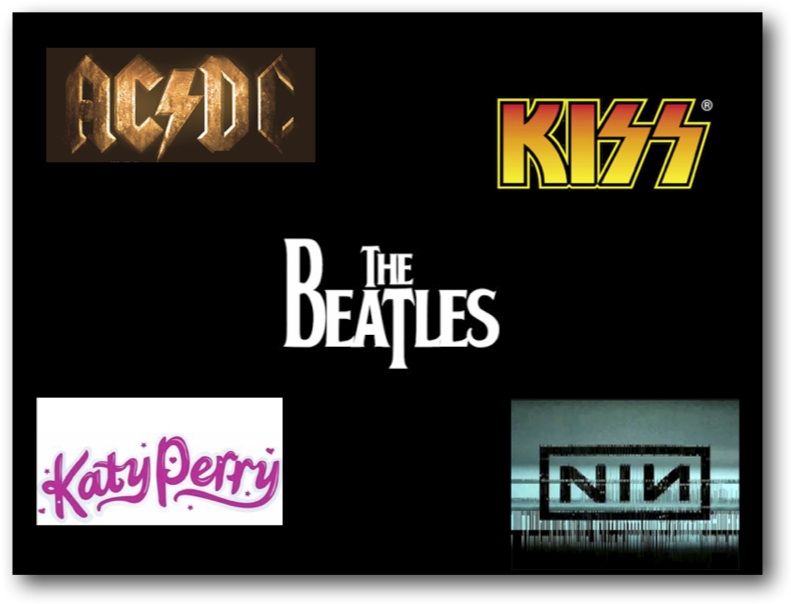
Music Logos image
Every artist, band or musician is a brand (whether they realize it or not), and one of the major distinguishing factors of a brand is its logo. Take a look at the logos on famous musical brands on the left. As you can see, all are instantly identifiable.

When coming up with a logo, sometimes there's a lot more to it than meets the eye. Here's a short video that illustrates the subliminal factors found in 8 well-known corporate logos.


There's a lot more about musical branding in Music 3.0: A Survival Guide For Making Music In the Internet Age.
----------------------------------

Follow me on Forbes for some insights on the new music business.

You should follow me on Twitter for daily news and updates on production and the music business.

Check out my Big Picture blog for discussion on common music, engineering and production tips and tricks.

5 Reasons Why The Album App Will Fail

Jay-Z image
It seems that all the hype coming from the recent Jay-Z Magna Carta Holy Grail album release has dissipated now that that everyone has actually seen what all the hubbub was about. Most of the heat from the release came from the fact that the artist made a deal with Samsung where the company purchased one million digital albums. Jay-Z then began a fight (that he eventually won) to have those albums counted as sales on the Billboard charts.


But what all those Samsung/Jay-Z users received left many feeling violated because of the amount of private information that was necessary to download the app in the first place, including their physical location, their phone number, and data about their phone calls and email. The users were then asked to sign in to the app via Facebook or Twitter, and send out a post or tweet about doing so if they wanted to unlock the lyrics to a song. 


----------------------------------

You should follow me on Twitter for daily news and updates on production and the music business.

Check out my Big Picture blog for discussion on common music, engineering and production tips and tricks.

Tuesday, July 16, 2013

Warner's Pays Up

Michael McDonald image
One of the primary operating principles of major labels has always been to get away with as much as possible when it comes to underpaying artist royalties. The idea is something like, "Let's not pay this, and if he ever finds out, he'll have to sue us first. Then maybe we can settle for less that we owe." That's the way it's always worked, and that's why record labels in general have received the reputations they now live with.

Another example of this came to light recently when singer Michael McDonald settled with Warner Bros for deliberately underpaying him on itunes downloads for his Doobie Brothers big hits. He's not the only one though. Artists like Kenny Rogers, Peter Frampton, The Cars and Queen's producer Roy Thomas Baker have all received recent settlements as well.

This particular line of suits came about as a result of the Eminem suit a few years ago, where his production company successfully argued that a download constituted a license and not a sale. As a result, the royalty should be 50% of the sale instead of the normal 12 to 20%.

Even though this might seem like a win, it's never really a total victory with record labels, since you never know for sure what the exact sales of your records are. Sure they send you a statement, but chances are the numbers favor the label and not the artist.

Even in todays online world of vastly improved measurement, it doesn't necessarily mean you're seeing the real numbers. No wonder so many artists would rather go the DIY route.

But let's face it, record labels aren't in the business to make money for their artists. The major labels only care about their shareholders, and well they should, since that's their real business. The real fact of the matter is that they care more about the artist's audience than the artist themselves. Every artist should understand this going into a record deal, and expect that they may have to do what Michael McDonald and all the others did if they have some success. It's just the way the business is.
----------------------------------

Follow me on Forbes for some insights on the new music business.

You should follow me on Twitter for daily news and updates on production and the music business.

Check out my Big Picture blog for discussion on common music, engineering and production tips and tricks.

Monday, July 15, 2013

Consumers More Willing To Pay For Streaming

Streaming Music image
Streaming music is coming to the forefront of music delivery more and more, and much of that can be attributed to the hype of new services like Apple's iRadio, Google Play and even Beats project "Daisy," but also because subscriptions to both Spotify and Pandora keep rising. The good news for these services is that people in some countries are now more willing to pay for streaming services than they were before.

A new survey sponsored by WiMP found that the percentage of willing payers has risen to 48% from 33% in Norway, 30% from 14% in Denmark, and 28% from 25% in Germany.

On the surface that sounds great for streaming, except for the fact that in Sweden (which has had paid streaming the longest, and streaming accounts for 90% of recorded music revenue), that number has decreased from 36% to 33%.

The Swedish data makes you wonder why it's going in the opposite direction. Are they unhappy with the services they have? Will the trend change with the introduction of new and potentially better services? Is there an issue with the amount being charged?

None of these questions were addressed by the survey, so unfortunately only part of the streaming picture is being painted.

That said, music streaming is now a boulder rolling down a hill that's picking up speed, and music is going to change substantially because of it in the future.
----------------------------------

You should follow me on Twitter for daily news and updates on production and the music business.
Check out my Big Picture blog for discussion on common music, engineering and production tips and tricks.

Sunday, July 14, 2013

The Importance Of Social Media Marketing

I"ve been working on a new book called Social Media Promotion For Musicians that shows artists, band and musicians the best way to promote themselves online. This infographic by Emarketed.com is a good example why social media marketing is so important. The numbers are a little dated but the broad scope of the graphics shows that you need to know how to market online with social media, otherwise you're missing a very big opportunity. By the way, Social Media Promotion For Musicians will be out in August.


----------------------------------

Follow me on Forbes for some insights on the new music business.

You should follow me on Twitter for daily news and updates on production and the music business.

Check out my Big Picture blog for discussion on common music, engineering and production tips and tricks.

LinkWithin

Related Posts Plugin for WordPress, Blogger...