Showing posts with label brand. Show all posts

Tuesday, October 1, 2013

What Is A Brand?

I've written about branding in various books, now you can see more about it in this short video from Lynda.com. Developing your own personal brand (or your band's brand) is extremely important these days if you want to stick out from the very large musical crowd and this video can set you on that road.

By the way, I've just completed a number of social media courses on Lynda that cover your website, mailing list, Facebook, Twitter, YouTube, Pinterest and a whole lot more. Click here to get a free 7 day subscription that you can use to check out the entire Lynda catalog.


----------------------------------

Follow me on Forbes for some insights on the new music business.

You should follow me on Twitter and Facebook for daily news and updates on production and the music business.

Check out my Big Picture blog for discussion on common music, engineering and production tips and tricks.

Wednesday, July 17, 2013

8 Logos With Hidden Subliminal Messages

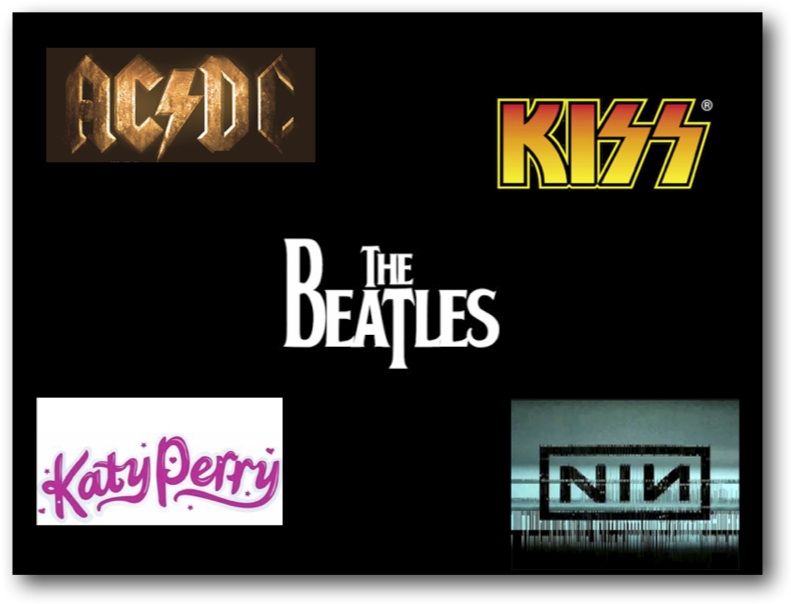
Music Logos image
Every artist, band or musician is a brand (whether they realize it or not), and one of the major distinguishing factors of a brand is its logo. Take a look at the logos on famous musical brands on the left. As you can see, all are instantly identifiable.

When coming up with a logo, sometimes there's a lot more to it than meets the eye. Here's a short video that illustrates the subliminal factors found in 8 well-known corporate logos.


There's a lot more about musical branding in Music 3.0: A Survival Guide For Making Music In the Internet Age.
----------------------------------

Follow me on Forbes for some insights on the new music business.

You should follow me on Twitter for daily news and updates on production and the music business.

Check out my Big Picture blog for discussion on common music, engineering and production tips and tricks.

Thursday, March 21, 2013

Music Celebs Extend Their Brands

Brand image from Bobby Owsinski's Music 3.0 blog
It used to be that a celebrity musician was loath to do anything commercial for fear of "selling out."

If you were successful with your music, you risked all of your credibility with your fans if your music appeared in a commercial, or your image was found on a consumer item.

Those days a long gone, as music celebs everywhere do whatever they can to extend their brands. It's a money grab that's now condoned, accepted and even expected by management and fans alike. And all without any stigma whatsoever.

I've posted about musician's private brands and even custom items like toothbrushes and clothing (even Jimi Hendrix!),  but once again we have multiple examples of music celebs reaching way beyond the music that made them famous.

Take for instance, Beyonce and Taylor Swift becoming the new faces of Pepsi and Diet Coke respectively. Depending upon which study you use, these are mostly unhealthy products endorsed by women who exude health.

Then we have Sean "Diddy" Combs and Mark Wahlberg investing in the premium water AQUAhydrate for fit, active party people. At least it's healthy.

Hip hop girl group OMG Girlz are the new spokespeople for Wat-AAH, another premium water product.

Pop-Water, a new flavored low-calorie product (I thought water is supposed to have zero calories) is backed by Lady Gaga manager Troy Carter. Then there's Golnside, a tea product, courtesy of manager Kevin Liles (Nelly, Big Sean, Trey Songz and a dozen others).

The fact of the matter is that success in music is merely a departure point to consumer product success for most artists these days. But can you really blame them?

In the days when "selling out" was considered taboo, artists weren't used to making or spending the kind of money available to them today. And those that did actually make that kind of money in music could have it sustain over long periods of time because the business was healthy, selling more product than ever, and even growing at the time.

Today, with the industry roughly half the size that it was before, success is much more fleeting, and the money that's here today probably won't be there tomorrow, which makes artist's desired to catch whatever financial wave they can more understandable. Plus, management is smarter than ever at exploiting every opportunity and even creating new ones for their artists.

That doesn't mean that some self-aware artists understand that expanding their commerciality beyond their music isn't inherently good for their brand. That still happens, and those artists should be applauded, but even those they will look for products that best fit with their brands, even it they won't be found on a convenience store shelf.

So to all you old school people longing for the "days of artist integrity," get over it. It's a new world. You may not like it, but it's not going back to the way it was any time soon.

----------------------------------

Interested in the Music 3.0 archives? Buy The Music 3.0 Guide To Social Media. The best of over 800 posts.

You should follow me on Twitter for daily news and updates on production and the music business.

Check out my Big Picture blog for discussion on common music, engineering and production tips and tricks.

Thursday, February 14, 2013

The New Contract Rider

Contract Rider image from Bobby Owsinski's Music 3.0 blog
A new contract rider that's being inserted into recent artist concert appearance agreements might surprise you. It's a condition that prohibits the artist's show advertising from appearing on a pirate site or any site that exploites artists in any way.

Another provision sets the condition that any show advertising can't confuse the artist's brand with one not consistent with the artist. That means that if the artist doesn't like firearms or tobacco or even Republicans, then the advertising for their concert can't be associated with those people, places and things in any way.

As far as brand association, this is just good business. If you're Taylor Swift, for instance, you don't want to be associated with a site that's biker oriented, and if an artist is a proponent of a vegan lifestyle, then being joined at the hip with Ted Nugent just wouldn't work either. This probably wouldn't happen to begin with since any adverts would be badly missing the target market and be just a waste of money, but the contract language now ensures that it won't.

That said, both the promoter and artist are trying to sell tickets any way they can, and let's face it, it's tough going in most markets these days. While all artists hate to be pirated, the fact of the matter is that at least some of the piracy is the reason for the visibility of the act in the first place.

Still, the new contract language just goes to show that everything in the business, including the agreements, is evolving as our media technology progresses.

----------------------------------
Interested in the Music 3.0 archives? Buy The Music 3.0 Guide To Social Media. The best of over 800 posts.

You should follow me on Twitter for daily news and updates on production and the music business.

Check out my Big Picture blog for discussion on common music, engineering and production tips and tricks.

Thursday, September 27, 2012

What Is A Brand?

Your Brand image from Bobby Owsinski's Music 3.0 music industry blog Whenever I speak at a college, I always ask the audience what their brand is. I usually get a blank stare back. Now I totally agree that business terms like "brand" will make a musician's eyes glaze over faster than an air guitar contest, but it's important to be self-aware about what your brand is.

One of the things that an artist or band hears a lot these days is the need to promote "your brand" in order to get ahead in Music 3.0. That's all well and good, but it's hard to promote your brand unless you know exactly what a brand is. So what exactly is a brand?

Here's an excerpt from the Music 3.0 Internet music guidebook that describes it perfectly:

"A brand is a promise of quality and consistency. No matter where in the world you go for a McDonald’s hamburger, you know what to expect. No matter what product you purchase from Apple, you can expect sleek high-tech design and an easy to understand user interface. Brand management is protecting the image of the brand and carefully selecting how to best exploit it.

For an artist, that means a consistency of persona, and usually a consistency of sound. Regardless of what genre of music the artist delves into, the feel is the same and you can tell it's the artist. Madonna has changed directions many times during her career but her brand remained consistent. Here persona remained the same even as she changed to and from the "material girl." The Beatles tried a wide variety of directions but you never once questioned who you were listening to. It was always fresh and exciting, but distinctly them.

On the other hand, Neil Young almost killed his career with an electronic album called "Trans" that alienated all but his hardiest fans, and the well-respected Chris Cornell may have done irreparable harm to his long-term career with his recent album with Timbaland ("Scream") even though it was the highest charting of his career. Why did this happen? For both artists, the album no longer "felt" like them. Both Young and Cornell built their careers on organic music played with a band, and as soon as their music became regimented and mechanical, they lost their brands. After Trans, Young returned to his roots and slowly built his brand back to superstar level, but it's too soon to know what will happen with Cornell.

How do you determine what your brand is? It's easier said than done.

In order for an artist to successfully promote their brand, they must have a great sense of self-knowing. You must know who you are, where you came from, and where you're going. You must know what you like and don't like, and what you stand for and why. And you must have an inherent feel for your sound and what works for you.

And that differentiates a superstar from a star, and a star from some who wants it really badly but never seems to get that big break."

For additional excerpts from Music 3.0: A Survival Guide For Making Music In The Internet Age and my other books, go to bobbyowsinski.com.

-----------------------------------
You should follow me on Twitter for daily news and updates on production and the music business.

Check out my Big Picture blog for discussion on common music, engineering and production tips and tricks.

Sunday, August 5, 2012

The 3 Pillars Of A Successful Brand

Brand image from Bobby Owsinski's Music 3.0 music industry blog
I've discussed branding a lot here and in my Music 3.0 Internet Music guidebook, and I've found that the thought of it either intrigues or appalls most artists. One of the problems with the process of branding is that by being such an obvious goal, it can feel like a sell-out. That very well may be true in some cases were the branding is created more for manipulation than for overall promotional strategy, but it is a new fact of life in the current music business that everything is based upon brands.

The problem is that whether you like it or not, if you're an artist you're already a brand. It may not be a strong brand, but then again, it very well may have become just that without any thought or effort on your part. What I want to outline here is exactly what a brand is and how it's created.

First of all, what exactly is a brand? In all situations, it's a promise of quality and consistency. For McDonalds, that means that anywhere in the world you can easily recognize a franchise, and a Big Mac will taste the same. For an artist, that means the sound and feel of their music and their image will retain the same familiarity. Madonna changed her style in clothing and music over the years yet her sound and image has always been relatively the same. The same goes for The Beatles or any of the legacy acts that have lasted 20+ years.

So what are the pillars of building the brand? There are 3:

Familiarity: You can't have a brand unless your followers or potential followers are familiar enough with who you are. They don't even have to know what you sound like to be interested if you have enough buzz and they've heard about you enough to want to check you out.

Likeability: Your followers have to like you or something about you. It could be your music, or it could be your attitude or your image. You could even say how much you hate your fans and do everything to ridicule them, and that could be the thing they like about you. It doesn't matter what it is, but there has to be something.

Similarity: Your fans have to feel that either you represent them either in a cause or movement (like a new genre of music), or that they can be you someday. Female Olympic athletes usually don't do well in this category because their sleek and muscular look is so far beyond what the ordinary girl or women can attain that they can't relate to them. On the other hand, young girls love Taylor Swift because they feel that she could be their best friend from next door.

If you have those three things along with consistent quality product (which hopefully is your music), you've got a brand. I wouldn't intentionally try to manufacture your brand so it absolutely complies with these pillars (people usually see right through that), but always keep these things in mind that this is how your audience looks at you, although none of them may even know it.
-----------------------------------
You should follow me on Twitter for daily news and updates on production and the music business.

Check out my Big Picture blog for discussion on common music, engineering and production tips and tricks.

Wednesday, May 16, 2012

Musicians Income From Branding

One of the basic tenets of Music 3.0 is that your music is your marketing, which means that you shouldn't be afraid to give it away as long as it raises your visibility and establishes your brand. Where music artists have always made the bulk of their money is from gigging and selling merchandise, and the actual music sales of an established artist is as little as 2%.

But it's easy to paint a pie-in-the-sky picture of how these revenue streams work, and I've been as guilty of this as anyone. The fact of the matter is, in order to make any of the current Music 3.0 principles work, you first need an audience. Now I cover how to establish, nurture and sustain that audience in the Music 3.0 guidebook, but it's really easy to overlook the fact that people really have to like your music, and you still have to put in a lot of work to make things happen. In other words, it's pretty difficult if a lot of people think you're mediocre; it's less difficult if a lot of people think you're great.

But beauty is in the eye of the beholder, and I firmly believe that almost any artist can find an audience out there if you search long enough. The problem is, it might not be large enough to sustain a career.

So let's assume that you've had at least some minimal success and developed a core audience (however large or small). How much revenue can you expect from your brand? Here's a great slideshow that the Future of Music Coalition did for their MIDEM 2012 presentation that represents a survey of 5000 musicians asked just that question.

View more presentations from midem
One of the major points that the slideshow makes is that you can't expect to make any money as a musician unless you establish your brand first, and even then you still might not make that much if you don't work it hard. Most musicians either don't know how or don't care about the brand part of their careers. If they're lucky, they latch on to an established brand (like a successful band) and ride its coattails. But if you're really interested in a long-term career, your personal brand is of utmost importance. Do it now!

-----------------------------------
You should follow me on Twitter for daily news and updates on production and the music business.

Check out my Big Picture blog for discussion on common music, engineering and production tips and tricks.

Thursday, February 2, 2012

Brands And Social Media

brand image from Bobby Owsinski's Music 3.0 blog
As I've posted here before, your brand is important is to your success as an artist. So what is a brand exactly? It's a combination of your image and your sound. Stray too far from either and you lose your brand identity.

Assuming that you maintain your brand integrity, here are few interesting facts from Atym Marketing Reseach about how social media plays into building that brand.
  • 29% of Twitter users follow a brand.
  • 39% have tweeted about a brand.
  • 29% have retweeted about a brand.
  • 58% of Facebook users have liked a brand.
  • 42% have mentioned a brand in a status update.
  • 41% have shared a link, video or story about a brand.
  • 66% of people who have liked a brand have 100 or more Facebook friends.
  • 84% are active daily.
How do your followers prefer to be communicated with?
  • 32% prefer to get short updates from the brand they follow.
  • 27% prefer emails.
  • 5% prefer blogs or press releases.
  • 5% videos
  • 1% audio podcasts.
The point of the stats above is that people who like brands are very active on social media and greatly influence others. That's why social media should always be a main part of your overall marketing strategy.
-----------------------------------
You should follow me on Twitter for daily news and updates on production and the music business.

Check out my Big Picture blog for discussion on common music, engineering and production tips and tricks.

Wednesday, December 8, 2010

I'm With The "Brand"

It seems that as a music star becomes more popular, so too does their desire to cash in on their fame through non-musical business moves. Then is so opposed to the spirit of what a popular musician used to be that it leaves those of us from that era more and more incredulous. UK paper The Independent just did a nice article on the subject and here are some of the examples that they came up with.
  • The R&B singer Usher teamed up with Mastercard to launch a range of credit cards.
  • Justin Bieber has, curiously for a 16-year-old boy, his own line of nail polish called "One Less Lonely Girl".
  • Madonna opened the Hard Candy Fitness centre in Mexico City, the first of what she hopes will be a worldwide chain of "first class" gyms.
  • Jennifer Lopez sold the first pictures of her twins Emme and Max to People magazine for a reported $6 million.
  • Beyoncé is now focusing on her clothing ranges, House of Dereon and I Am Sasha Fierce.
  • Jay-Z has non-musical business opportunities including the clothing label Rocawear and the New York nightclub 40/40.
  • 50 Cent, Eminem and P Diddy all have their own clothing ranges, while P Diddy has also carved out an extra source of income for himself in promoting the vodka brand Cîroc.
  • The popular Guitar Hero game now has Metallica and Aerosmith versions, while stars such as Ozzy Osbourne (who made himself into a product with a reality TV show about his home life) are playable characters.
  • X-Factor winner Leona Lewis was signed up by the game Final Fantasy XIII, where she appeared in advertisements for the product and allowed one of her songs to be used in the game.
  • Last year, pop star Katy Perry said: "I have a job, I know my responsibility and I'm always trying to take it to the next level ... most of these bitches just hawk breath mints or shoes. No offence to them, but maybe I'll hawk shoes later in life." She seemed to have forgotten all that, however, when she debuted her own perfume, Purr, last month.
Once again, celebrity seems to mean more these people than being an artist.

-----------------------------------
Follow me on Twitter for daily news and updates on production and the music business.

Check out my Big Picture blog for discussion on common music, engineering and production tips and tricks.

Wednesday, September 29, 2010

What Is A Brand?

One of the things that an artist or band hears a lot these days is the need to promote "your brand" in order to get ahead in Music 3.0. That's all well and good, but it's hard to promote your brand unless you know exactly what a brand is. So what exactly is a brand? Here's a quote from the Music 3.0 Internet music guidebook that describes it perfectly:

A brand is a promise of quality and consistency. No matter where in the world you go for a McDonald’s hamburger, you know what to expect. No matter what product you purchase from Apple, you can expect sleek high-tech design and an easy to understand user interface. Brand management is protecting the image of the brand and carefully selecting how to best exploit it.

For an artist, that means a consistency of persona, and usually a consistency of sound. Regardless of what genre of music the artist delves into, the feel is the same and you can tell it's the artist. Madonna has changed directions many times during her career but her brand remained consistent. Here persona remained the same even as she changed to and from the "material girl." The Beatles tried a wide variety of directions but you never once questioned who you were listening to. It was always fresh and exciting, but distinctly them.

On the other hand, Neil Young almost killed his career with an electronic album called "Trans" that alienated all but his hardiest fans, and the well-respected Chris Cornell may have done irreparable harm to his long-term career with his recent album with Timbaland ("Scream") even though it was the highest charting of his career. Why did this happen? For both artists, the album no longer "felt" like them. Both Young and Cornell built their careers on organic music played with a band, and as soon as their music became regimented and mechanical, they lost their brands. After Trans, Young returned to his roots and slowly built his brand back to superstar level, but it's too soon to know what will happen with Cornell.

How do you determine what your brand is? It's easier said than done.

In order for an artist to successfully promote their brand, they must have a great sense of self-knowing. You must know who you are, where you came from, and where you're going. You must know what you like and don't like, and what you stand for and why. And you must have an inherent feel for your sound and what works for you.

And that differentiates a superstar from a star, and a star from some who wants it really badly but never seems to get that big break.

-----------------------------------
Follow me on Twitter for daily news and updates on production and the music business.

Check out my Big Picture blog for discussion on common music, engineering and production tips and tricks.

LinkWithin

Related Posts Plugin for WordPress, Blogger...