Showing posts with label Soundscan. Show all posts

Monday, May 2, 2016

Old Music Outsells New In 2015

Nielsen's latest music report is out and, as always, it's very revealing about what we listen to in the U.S. Perhaps it's biggest revelation is that, for the first time, old music (known as catalog sales) outsold new music in 2015.

Catalog is defined as a music release that's more than 18 months old. Of course, we're also talking about music sales and not streams, which is an entirely different matter.

That said, sales of older music came despite the huge sales numbers for Adele's giant 25 album, which was only available for sale and not as a stream. The album went on to sell 7.2 million copies in the last 6 weeks of 2015 in the U.S. alone.

But lest you think that CDs are completely dead, 2015 saw 125 million of them sold for about $1.52 billion in revenue, which is still a huge amount of money.

And that's only the CDs that were tallied by Soundscan. CDs sold privately on events and online aren't counted.

Beyond that, there were 103 million digital albums downloaded, and 11.9 million vinyl albums sold.

As you can see on the chart on the left, catalog music leads over new music in all facets of sales. I guess the "Long Tail Theory" must be working.


Wednesday, October 21, 2015

Where Are People Buying Their Music?

There's still a lot of physical music product being sold despite what you might read, but the places that people are buying it is changing.

According to Soundscan, retail stores are selling less and less, but some of the slack is being taken up by non-traditional retailers like Amazon, which grew 8%.

Retail chains, mass merchants like Wal Mart, dowload stores, and mom & pop stores all saw their sales decrease last quarter.

Overall, CD sales are down 10%, but still sold a healthy 82.6 million, and vinyl sales still continue to surge, up 32% to 8 million sales.

Physical product is far from dead, but it's certainly decreasing at a rapid rate.

Tuesday, July 8, 2014

Will The Album Go The Way Of The VHS Tape?

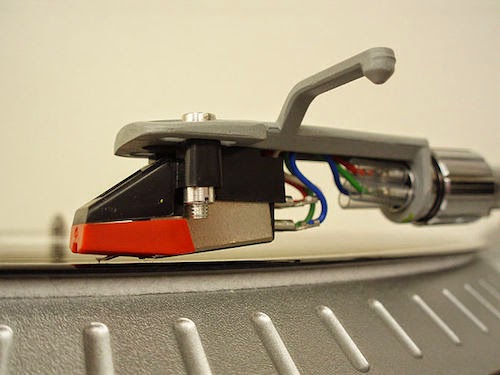
Stylus and Cartridge image
Another Soundscan report is in and once again, album sales in the United States have slipped, this time from 235 million to 227 million compared to the same period last year. This is actually nothing new, since the format has been in a major decline since 2000, when sales were at an all-time high of 785 million.

Just to be clear, 227 million of anything is still a lot of units, and it should be noted that these are only the sales that can be counted. With so much of an artist’s income coming through DIY methods these days, there are millions of CD and vinyl sales made on artist websites and at gigs that go unreported.

That said, its clear that the trend in music is away from the album format, even when its digital, as streaming becomes the norm for music consumption everywhere. It wasn’t always that way, though, as there was a lot of reasons why the big 10 inch caught on in the first place.

A Case For Albums
One of the things that albums in vinyl record form required of the listener was an increased attention span longer than what was needed for a single, at least for the length of one side of the record, or about 20 to 25 minutes. This time limit was imposed by the limitations of the vinyl itself, as a longer running time would result in increased noise and a lower output because of the shallower grooves that were required in order to fit them into the same vinyl area. 

The one thing this did do, however, was divide the album into an easily consumable block of time; one that was long enough to get a sense of what the artist was trying to say. It was also a way of discovering songs that appealed to the public ear on a level that might not have been anticipated by either the artist or the record label. So many of the classic hits we’ve come to know and love through the years fall into this category, like Marvin Gaye’s version of “Heard It Through The Grapevine,” Stevie Wonder’s “Isn’t She Lovely,” and Eric Clapton’s (actually Derek and the Dominos) “Layla,” just to name a few. Plus, the artist was able to make a statement with the album as a whole, as evidenced by the big hits of day like The Beatles' Sgt. Pepper, Nine Inch Nails’ The Downward Spiral, and Greenday’s American Idiot. Read more on Forbes.
----------------------------------

Sunday, April 14, 2013

Are Cassettes The New Vinyl?

Every time you think the novelty has worn off the resurgence of the lowly cassette, it seems to come roaring back again. As unlikely as it seems in this age of instant access libraries of millions of songs online, this technology from the last century still has some life.

The great Hypebot blog recently posted an article regarding the number of cassette-related articles found in a Google search, which showed the revival still gaining speed. That's difficult to quantify in numbers, since most units are distributed by micro-labels who only do limited runs and don't report to SoundScan.

That said, this report and video from the Wall Street Journal shows the mindset of the typical cassette buyer and seller very well.


----------------------------------

Interested in the Music 3.0 archives? Buy The Music 3.0 Guide To Social Media. The best of over 800 posts.

You should follow me on Twitter for daily news and updates on production and the music business.

Check out my Big Picture blog for discussion on common music, engineering and production tips and tricks.

Sunday, January 6, 2013

Digital Sets Records But Album Sales Fall In 2012

SoundScan released its yearly report and it seems that 2012 brought us some surprises when it comes to record sales. Here's a brief outline of the year that was.
  • Album sales fell by 4.4% from 330 million to 316 million. 
  • Digital albums accounted for 37% of the sales, but CD sales still dropped by 13%.
  • Digital sales were up 5% from the previous year to an all-time high of 1.34 billion units.
  • Country was up 4.1% in album sales, rock (still the biggest selling genre) was up 1.4%, but every other genre slipped from the previous year, with jazz down 26% and classical 20%.
  • The top album seller was once again Adele's 21 with 4.4 million copies, followed by Taylor Swift's Red at 3.1 million and One Direction's Up All Night at 1.62 million.
  • In terms of individual track sales, most genres rose in sales, with world music increasing the most with 111%, EDM at 36%, and blues by 24%
  • Vinyl was up over last year once again, with 4.6 million copies sold, lead by Jack White's Blunderbuss at 34,000 and The Beatles Abbey Road at 30,000.
What's significant in these numbers is that it's increasingly obvious that we're in a singles world (as if you didn't know already), regardless of what the major record labels might want. Album sales continue to fall except in rare cases as consumers have increasingly decided that they want the hits and the hits only.

----------------------------------

You should follow me on Twitter for daily news and updates on production and the music business.

Check out my Big Picture blog for discussion on common music, engineering and production tips and tricks.

Thursday, July 5, 2012

Music Sales For 2012 Not Pretty

Soundscan image from Bobby Owsinski's Music 3.0 blog
Soundscan released its mid-year music sales report on Wednesday and for the most part, the state of the industry is not pretty.

Album sales are down 3% from last year, but that's not the worry. The biggest seller is still Adele's 21, an album released at the beginning of last year. New albums from superstars like Justin Bieber, Madonna, Bruce Springsteen and Nicki Minaj have yet to make much of a sales dent.

150 million albums have been sold so far this year, behind last years 155 million. Adele's 21 has sold 3.69 million this year and more than 9.4 million in the US since it was released in January of 2011. What's a bit depressing is that 21 is the only album that's cracked the million barrier this year. Lionel Ritchie's Tuskegee is close with 912,000, and the latest boy band sensation One Direction and their Up All Night comes in third at 899,000.

But only 11 albums have gone past 500,000 this year so far, despite all the superstar releases. This is also down from last year when 16 went gold by this time.

Singles are a bright spot, however, as they're up over last year by 6%. The top selling track is Gotye's "Somebody That I Used To Know," with over 5.5 million downloads since the first of the year. fun.'s "We Are Young" is the runner up with 5.09 million sold, with Carly Rae Jepsen's "Call Me Maybe" (which is selling for a quarter on Amazon MP3) coming in third with 4 million downloads.

Even those numbers are down a bit though. In 2012, 47 songs have sold at least a million, while in 2011, 52 songs had reached that point by this time of the year.

Is streaming starting to take it's toll?

-----------------------------------
You should follow me on Twitter for daily news and updates on production and the music business.

Check out my Big Picture blog for discussion on common music, engineering and production tips and tricks.

Thursday, June 2, 2011

Prince And Gaga Prove The New Music Business Model

By now I'm sure that everyone's heard about Lady Gaga selling 1.1 million copies of her "Born This Way" album last week. On the surface this seems like a huge number, especially for an artist these days, but there's more here than meets the eye.

First of all, the digital sales were about 660,000, but 440,000 of them came from Amazon's two day $.99 promotion. This set a one-week SoundScan record for most digital sales, and became the eighth best-selling U.S. digital album of all time. But the significant thing here is the price, 99 cents, which we'll get to in a minute.

Next in the news was the fact that Prince just ended his 19 day run playing the Forum in Los Angeles. What's significant here is that the majority of the tickets in the 18,000 seat venue were priced at only $25.

Why is that important? Because it shows a new trend in the entertainment business were price is a motivating factor in purchases.

Way back before music became the commodity that it is today, everyone felt they got a fair value when purchasing either an album or a concert ticket. The price was cheap enough that if you bought something that you didn't like, you didn't feel ripped off or filled with buyer's remorse. It was easy enough to buy the next album or a ticket to the concert without feeling it in your pocketbook too much.

Of course all this changed when Wall Street became involved in the music business after it smelled big money in the 80's. The prices for premium artist's CD's were double what consumers were used to paying for vinyl records, so if you bought one that you didn't like or only had one good song on it, you indeed felt the financial pain of a near worthless purchase.

Likewise for concerts. It was nothing for a music fan to go to several concerts a month during that era. They were cheap enough that you didn't feel like you'd have to miss lunch for the next two weeks to pay for it, and you felt comfortable about spending money to see a new unfamiliar act.

Of course that all changed when the price of tickets, concessions, parking and service charges went to the sky. Music lover's buying habits slowed to only a show or two a year instead of every month. In it's greed, the industry tried to milk every single dime from the consumer at the expense of a making them a returning customer.

With Gaga signing on for the Amazon promotion, it proves that consumers are more price conscious than ever with music, and will buy in large number if the price is right. With Prince lowering the ticket price to $25, and doing a good business in doing so, it proves that people will still show up if the price is right.

Although the numbers are unofficial, it seems that prince sold as few as 6,000 seats on some nights, but that's still enough to make money since both his and the venue's overhead was amortized over the number of dates played. Gaga still sold more than 500,000 albums at $13 to 16, despite the 99 cent promotion (although her number have steeply fallen since), once again proving that online, the more you give it away (or almost give it away), the more you sell.

It's about time that the industry learns that price is a barrier to sales. It's hard to believe they didn't know that in the first place.
-----------------------------------
Help support this blog. Any purchases made through our Amazon links help support this website with no cost to you.

You should follow me on Twitter for daily news and updates on production and the music business.

Check out my Big Picture blog for daily discussion of music, recording, and production tips and tricks.

Sunday, May 1, 2011

The Official 2010 Music Sales Stats, Or Are They?

As you can see from the chart on the left, the RIAA recently released their official 2010 music sales statistics. As with most stats, they can be interpreted different ways, both good and bad. Here's one way to look at them.
  • 1.265 billion downloads were sold worth $2.38 billion. That's a lot of music.
  • Ringtones (seen here as Mobile) were down by just about 28%, but worth $526 million, still a lot of money.
  • There were almost 30% more subscribers to subscription music, but the revenue was down by almost 6%. Not a good sign.
  • No surprise here, but CD sales were down by 23%, but that meant that there were still 226 million sold for a revenue total of $3.36 billion. That might not be as much as what was sold at the height of the business, but it's still a lot of music.
  • Vinyl was up by 26%, but that only meant 4 million units for $87 million in income, a mere drop in the bucket.
  • One excellent stat for musicians is that performance royalties were up by 60% to $249 million.
Now keep in mind that what these stats represent are every sale that's been recorded by Soundscan (the service that measures music sales whenever a barcode is scanned), but doesn't represent anything sold independently on artist websites or distribution sites like CD Baby or TuneCore. It's been suggested that there's actually a huge hidden and uncounted amount of sales that you'll never see represented. As a result, the music business may be much healthier than the RIAA stats indicate. The problem is, we'll never know for sure.
-----------------------------------
Help support this blog. Any purchases made through our Amazon links help support this website with no cost to you.

You should follow me on Twitter for daily news and updates on production and the music business.


Check out my Big Picture blog for daily discussion of music, recording, and production tips and tricks.

Sunday, January 30, 2011

Are Music Piracy Numbers Overblown?

It's always so difficult to determine what to make out of any statistic regarding content piracy, since it's all such a big guess. Think about it for a second - if it's as difficult as it is to get precise numbers on real sales that aren't being reported (anything outside of SoundScan, like direct downloads or CD sales off an artist's website, usually isn't taken into consideration), what makes anyone think that the piracy numbers are anything more than a number pulled out of thin air?

I've heard from usually reliable sources that for every 1 legal digital download there are 20 that are pirated, yet others have told me it's only 1 in 10. Last week the IFPI reported that sales from digital albums dropped 12%, and in their minds it was mostly due of pirated music (you can read more about the report here). Don't you think it could be because the number of cash cow CD sales are down, or maybe because there hasn't been as many really big hits lately, or that music in general is soft because there hasn't been a new trend that pushes sales for a while?

Former EMI president Rupert Perry once told me in an interview for my Music 3.0 book that even back in the 60's they always thought that they were losing at least 20% of their sales to piracy, so this isn't something new to the industry at all. But it certainly makes for a convenient excuse when sales decline year after year the way they have.

Now a study conducted at Carlos III University of Madrid in Spain, in collaboration with scientists at the IMDEA Networks Institute, the University of Oregon (USA) and the Technical University of Darmstadt (Germany), seems to give us a better picture of exactly what's happening in piracy land.

According to an article on Smarplanet, the researchers found that illegal file sharers tended to be either  organizations (like record labels) that put up fake or malware-infected files to discourage piracy (called “fake publishers”), or "top publishers" who earn a profit from advertising and subscription using pirated content as bait.

In the end, the study concluded that "since BitTorrent’s popularity is tied to a small group of users who engage in illegal file-sharing for 'economic benefits,' if the same users lost interest or simply disappeared, BitTorrent’s traffic would be 'drastically reduced.'”

This suggests that piracy, while still a problem, isn't as bad a problem as we've been lead to believe, and certainly no worse than it's ever been. The problems of the music industry must lie somewhere else, which is something that we'll cover in another post.

-----------------------------------
You should follow me on Twitter for daily news and updates on production and the music business.

Check out my Big Picture blog for discussion on common music, engineering and production tips and tricks.

Wednesday, August 11, 2010

Ga Ga Numbers

With all the talk about DIY (do it yourself) for bands and artists, the only way that you can get really, really big numbers is with the infrastructure of a record label at your back. The LA Times printed the following numbers in an overview of Lady Ga Ga's impact on current music.
  • 3.64 million: The number of copies Lady Gaga's "The Fame" has sold in the U.S. since its release in August 2008, according to Nielsen SoundScan. (As of Aug. 1, 2010.)
  • 1.3 million: The number of copies "The Fame" has sold in 2010 alone, making the 2-year-old album this year's fourth-bestselling album thus far. All sales numbers are courtesy of Nielsen SoundScan. (As of Aug. 1, 2010.)
  • $24 million: Billboard's estimate of the gross for Lady Gaga’s 47 European and Pacific Rim tour dates.
  • $440: The most expensive ticket package when Lady Gaga returns to Staples Center on March 28, 2011.
  • $40: Cost of a Lady Gaga 2010 tour shirt.
  • 179: Total number of shows Gaga will have played when the tour wraps next year (it began in 2009).
  • 13: Number of Moonmen she could potentially walk away with at this year's Video Music Awards; she received the most nominations ever in a single year.
Now the only way any of this happens is with a major record label, at least at this point in time. And that's the one thing that they're very good at, capitalizing on a trend. The problem is, an artist like Ga Ga only comes around once a decade at most.

Will the major labels be capable of doing the same thing the next time around?

-----------------------------------
Follow me on Twitter for daily news and updates on production and the music business.

Check out my Big Picture blog for discussion on common music, engineering and production tips and tricks.

Sunday, April 11, 2010

Digital Music Numbers Drop After Rise In Price


Music insiders said it would happen and the numbers show that it finally has. As predicted (see my previous article), after the major labels raised the track price of their most popular digital hits from 99 cents to $1.29, digital sales have declined for the first time ever.

According to Nielsen SoundScan (who tracks all physical and digital sales for the industry), the drop was only a little less than 1 percent, but it was certainly symbolic that the shortsightedness of the major labels has soured one of the few remaining bright spots of a suffering industry.

So why did they raise them in the first place? First of all, it was a power play against Steve Jobs and iTunes. The major labels have always hated the fact that a computer company was not only setting the price for their product, but distributing it as well. The second reason was that they figured (wrongly it would seem) that they'd make more money from the same amount of downloads since they never believed that the sales would decline. Even if they did, it was thought, they'd make the same money with fewer sales.

While this may be true, it's simply a bad idea from the longevity standpoint of an artist. In Music 3.0, you want as many fans to buy in as possible, not fewer. Sure, many will just illegally download the music anyway, but many won't because of the hassle factor involved. The more involvement from the fanbase, the better for everyone.

Regardless, raising the prices on a product that's not a necessity during a severe recession doesn't make much sense no matter what industry you're in.

That being said, the labels do have some really smart people working for them who could really change the landscape of the business if they were only given a chance. That just might be too much to hope for, I'm afraid.

----------------------------------------------------


Follow me on Twitter for daily news and updates on production and the music business.

Check out my Big Picture blog for discussion on common music, engineering and production tips and tricks.

Thursday, April 1, 2010

Billboard Magazine Introduces Digital Charts

It's about 5 years too late, but Billboard magazine (once the bible of the music business) has finally introduced new digital download charts ranking the top songs in 21 specific genres, compiled from data gathered by Nielsen SoundScan.

Each week Billboard will include six 15-position charts representing digital sales, with rock, country, R&B/hip-hop and Latin running each week and two other genres rotating. All charts appear on billboard.biz, where Billboard's charts are refreshed each Thursday.

Billboard has had a general chart for digital songs and digital albums, but dividing it into different genres  is something really needed and too long in coming.

While chart position is all well and good, the real information that everyone wants to see are the sales figures. You can get these if you pay the hefty fee and subscribe to SoundScan (but who can afford a 5 figure subscription rate these days), but for physical product at least, you can still go to the Hits Daily Double and see the new sales chart every Tuesday. Be warned, it might not be pretty on some weeks, as sales figures can be really dismal sometimes.

Maybe Hits will also give us digital sales soon as well. We can only hope.

For production news, tips and tricks, check out my Big Picture blog.

Follow me on Twitter for news and blog updates.

Sunday, February 14, 2010

When Information Is More Important Than Music

David Frey, manager for Cheap Trick, hit upon an interesting point in his post on the Tunecore blog the other day. He stated that Neilsen/Soundscan (the company that measures CD and digital sales), Amazon, Ticketmaster and a host of other entities own all the information of the band's sales, and that they then sell it to whomever wants it. Of course, the band doesn't get a piece of the sale but that's besides the point here.

Frey was taking issue especially with Soundscan, who would sell that info and the end result was to the detriment of the band. Whenever Cheap Trick would self-release an album, a new re-issue would suddenly appear from the band's former record labels which would in turn cannibalize the sales of the band's new release. How would the labels find out? They'd buy the info from Soundscan.

So Frey and the band decided to try to get around Soundscan, this time by releasing the album through Tunecore and specifically requesting that it not be reported to Soundscan. But Soundscan still managed to get the data. Since they could no longer collect it, they'd buy it from the likes of Starbucks, the major retailers like Best Buy and Wal-Mart, iTunes, Amazon, and any number of other sources. Soundscan then was able to sell the info once again to anyone that wanted it, and so the cycle continues.

Cheap Trick has been a more-or-less music business constant for over 35 years so this incident doesn't apply to most artists and bands just entering the business or trying to get over the visibility hump. Still, it does illustrate that your information (both the sales data and meta-data) is an important product in Music 3.0, and that's it's difficult at this time to control and near impossible to make money from.

I predict that data and meta-data ownership will become a huge battleground in the future as more artists become aware that they own own a lot less of their information than they think.

LinkWithin

Related Posts Plugin for WordPress, Blogger...