Showing posts with label Beats Music. Show all posts

Tuesday, September 1, 2015

Why Ian Roger’s Departure From Apple Music Puts It In A Bad Place

Apple Music image
It’s been reported today that Apple Music executive Ian Rogers has left the company to pursue other interests in an “unrelated industry.” That bodes ill for Apple as Rogers was the operational brains behind both Beats Music and its transition to Apple Music.

Rogers has been a long-time digital music insider, having run Beats Music, Topspin (a direct to consumer marketplace for artists and bands) and Yahoo Music. He’s also one of the smartest and level-headed guys in an industry with a dearth of those attributes.

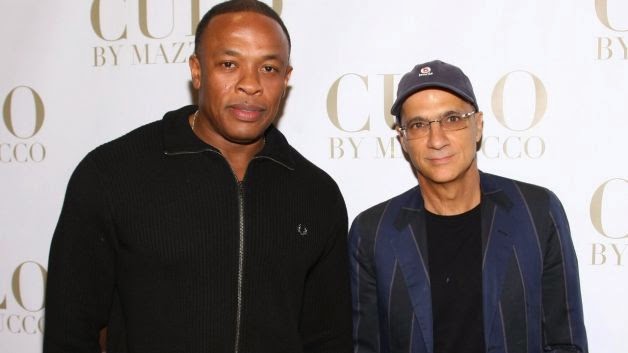
It’s been long speculated that Rogers was a key ingredient in Apple’s acquisition of Beats. Jimmy Iovine may be a vaunted music exec, but he’s been compared to a New York street hustler by many that have done business with him through the years. Dr. Dre is great producer, but he’s seen as a marketing foil for Iovine. Together they were able to turn some cheap Chinese headphones into gold thanks to a licensing deal with Monster Cable, then flip it for a huge profit to Apple.

Rogers was the guy behind the scenes that quietly created the Beats Music service, which was always going to be limited because of the Beats brand and its tie-in with the headphones. He had his finger on the market and the down-in-the-trenches everyday music consumer much more so than Iovine or Dre ever did, and that’s one of the reasons why Apple bought the company. He was just the kind of guy they needed to run the next iteration of iTunes.

I had the pleasure of hearing Rogers speak many times and even interviewed him for a previous edition of my book Music 4.0: A Survival Guide For Making Music In The Internet Age. I always came away much more enlightened than before, both in local and global views of the music market. Ian knew his customers very well, the tools they were using, and the music they were listening to. Read more on Forbes

Thursday, April 9, 2015

Apple's New Streaming Service May Have A Rough Start In Europe

Apple Beats image
Regulators in the European Union may throw a roadblock into Apple's upcoming launch of its new streaming music service.

Reports from both the New York Times and Wall Street Journal have sited multiple sources that say that the computer giant is increasingly under examination in Europe in its dealing with record labels. As a result, EU regulators have sent questionnaires to major labels and other streaming services regarding their dealings with Apple.

The supposition is that the tech giant hasn't been entirely truthful with the record labels in the past and regulators want to get to the reality of the situation before the new streaming service is launched. The streaming network is expected to be part of iTunes and is based upon the infrastructure of Beats Music, which Apple purchased last year.

There have been reports that Apple has been pushing the labels hard for a new deal that would enable the company to lower the monthly subscription rate for the upcoming service from the industry standard $9.95 per month to $7.95.

While $4.95 is thought to be the pricing sweet spot, major label licensing deals have made that price point impossible except for limited feature tiers or introductory pricing. Read more on Forbes.

You should follow me on Forbes for some insights on the new music business, Twitter and Facebook for daily news and updates on production and the music business.

Friday, March 20, 2015

Jay-Z’s Radical Idea Is Out To Upend The Streaming Music Business

Jay-Z image
Rapper and business mogul Jay-Z has an old idea that he’d like to try out on the new music business.

Prior to the official announcement of his acquisition of the Swedish streaming music service Aspiro, the magnate held a giant pow-wow with some of the movers and shakers of the music business during Grammy week in February.

According to a post on Showbiz 411, guests at the meeting were literally a who’s who of music creators, including Madonna, Kanye West, Daft Punk, Nikki Minaj, Chris Martin of Coldplay, Jack White, Beyonce, two unnamed country music stars and about 20 other non-musicians ranging from attorneys to music execs. 

The reported reason behind the meeting was to gather information about how Jay-Z could turn his upcoming streaming network into something along the lines of the old United Artists film studio, where the artists themselves had control of the business and reaped more of the rewards than in the current mostly-corporately owned system.

Jay-Z (real name Shawn Carter)‘s company Project Panther Bidco Ltd complete its purchase of Aspire on March 13th. The company owns the WiMP and TIDAL streaming networks, one of the few services to currently provide CD quality streaming. The network is small with only 512,000 paying subscribers with only about 20,000 of those subscribed to the high-def tier. Upon relaunch the network will be renamed TIDALHiFi

The purchase seems like a good one from Jay-Z’s perspective. Paying only about $56 million for a service that already has infrastructure and subscribers seems like a steal compared with the estimated $300 million that Apple paid for the Beats Music service as part of last year’s $3 billion Beats acquisition. Still there’s plenty of challenges, with services like Pandora and Spotify already with a huge head start and deep pocket competitors like Apple (with its new service built around the Beats Music infrastructure) and Google (with its YouTube Music Key) set to relaunch later in the year. Read more on Forbes.

You should follow me on Forbes for some insights on the new music business, Twitter and Facebook for daily news and updates on production and the music business.

Tuesday, January 27, 2015

Are New Analytics Coming To Beats Music?

Musicmetric sample image
Musicmetric sample
Apple recently acquired a British analytics service company called Semetric, according to The Guardian, making many wonder whether improved analytics will be part of the new Beats Music when it relaunches later this year. Although an exact sales price was not revealed, it's estimated by the Financial Times to be around $50 million.

The interesting part of the deal is that Semetric owns the music analytic service called Musicmetric, which specializes in tracking sales, pirated downloads and artist social media for labels and independent clients (see a sample on the left). The company recently struck a deal with Spotify to include its dashboard on the service, although another analytics company, Next Big Sound, provides the data.

While virtually all streaming music services provide some sort of analytics, the presumption is that Musicmetric brings greater depth than what's normally available, which could be a factor in making Beats Music more attractive to some labels and artists.

Apple has also been attempting to renegotiate its current licensing deals with the major labels in order to bring the monthly subscription fee down to around $5, which could be the killer feature for consumers. This is no sure thing, however, as the labels have been very reluctant to do so.

Whatever the case, Beats Music is set to cause some disruption in the streaming music side of the business. Both Spotify and Pandora should be very concerned, as they don't have nearly the deep pockets to match an all-out effort by Apple to gain market share.

Thursday, January 15, 2015

Only 1 In 4 Spotify Users Pay

Spotify is growing and it now has more than 60 million subscribers, but how many of those actually pay? It turns out that about 25% are paying subscribers, bringing the figure to around 15 million, which was a substantial increase over the previous year. What's more, that's still a lot better than Pandora, which runs at about a 10 to 1 paying subscriber ratio.

That said, Spotify has been running discounted deals for the better part of that time period, so basically no one is paying "retail" for their subscription. The big question is, what will happen when the prices go back to normal?

The other major looming question is, what will happen when Apple's Beats service is reloaded and launched this year, along with YouTube's Music Key? Will the increased competition stunt Spotify's growth?

If I had to wager on it, I'd say that all of those concerns will factor into a tougher year for the platform in 2015.

Here's a infographic from Statista that shows Spotify's recent growth.
Infographic: Spotify Has 60M Users But Only 1 in 4 Pays | Statista
You will find more statistics at Statista

Monday, December 29, 2014

10 Out On The Limb Music Business Predictions For 2015

Future Crystal Ball image
Here we are again at the end of another year and it’s time to gaze into the crystal ball to see what 2015 might have in store for the music business. I hit on about half of my predictions last year, with most of the others still pending as the story lines developed slower than anticipated. Here are 10 music business predictions for the upcoming year. 

1. Apple launches a new music service. Beats Music doesn’t have a huge number of subscribers so it can be retired without fear of killing a well-liked brand. In its place Apple will launch a new on-demand streaming service that’s cheaper than the competition and features high resolution audio.

2. High resolution audio becomes a standard streaming feature. TIDAL and Deezer set the precedent, and soon all streaming services will offer at least one tier of hi-res audio. Of course, the definition of high resolution will continue to be a moving target, as some services equate the term with CD quality while others offer higher sampling rates and/or 24 bit depth.

3. The digital pie gets larger. As consumers become more comfortable with on-demand streaming, larger numbers of them register for the various platforms. More of them than ever are willing to pay for their service of choice than ever before.

4. Downloads continue to slide. Downloads fall below $1 billion in total revenue as music consumers find that having access to millions of songs is a lot better than owning just a few.

5. Vinyl soars again. Once only a blip on the radar of the industry, vinyl sales continue to grow to the point where they make a very small but significant contribution to the bottom line of many record labels. For the first time in 40 years, new vinyl production gear is produced to meet the demand. Read more on Forbes.

Sunday, December 21, 2014

The 10 Biggest Bombshells In Music In 2014

U2 image
We’re almost to the end of the year and it’s always instructive to take a look back at the biggest stories that occurred in the music business. The ones that happened in the first two quarters seem so far away now, but that doesn’t mean they were any less important to the overall evolution of the business. I’m going to provide an arbitrary ranking of the top 10 stories from most to least important, but the order can easily change depending upon your outlook or station in the industry, or the current news that’s trending today. Here we go:

1. Apple purchases Beats Electronics and Beats Music. As I said at the time, I think this was more about acquiring the talent (meaning Jimmy Iovine and Ian Rogers) than the company, infrastructure or products, but time will tell. Not much has happened since the purchase in May, but look to 2015 to see how both Beats Electronics and Beats Music are implemented into the Apple ecosystem.

2. Streaming is way up and downloads are way down. Although there’s still a pretty healthy business in CDs and downloads in terms of total revenue, it’s dropping off rapidly as streaming has finally breached the threshold of consciousness for most music consumers. Look for this trend to continue to gather steam in 2015, with the next big battle being between streaming platforms rather than the different delivery systems.

3. YouTube’s Music Key service is finally announced. Rumored for more than a year, Google’s Music Key subscription service was announced and launched as a closely held beta in November. With no ads, offline listening, and access to the entire Google Play catalog, the platform has the makings of a formidable competitor to iTunes, Spotify and every other streaming service. 2015 will tell the tale.

4. Taylor Swift pulls her music catalog from Spotify. This story would rank a lot lower except for the public uproar, as it’s really more of a money grab than a philosophical stand. Swift claimed that she was standing up against the low royalty rate that Spotify was paying, yet her music remained on other streaming services, which contradicted the argument. The real reason for the hubbub is that her record company (of which she owns a piece) is angling to get acquired, so selling more CDs would help the bottom line a lot more than additional streams. The controversy and the fact that many fans were driven to buy the CD because they couldn't access the songs on Spotify took care of that.

5. U2’s free iTunes album giveaway backfires. Both Apple and U2 proved to be both short-sighted and out of touch when a copy of their latest Songs Of Innocence album showed up in every iTunes account. The problem was that everyone under the age of 30 felt that they were spammed. Hopefully the lesson was learned that music is only valuable when it's wanted. Read more on Forbes.

Thursday, November 20, 2014

Apple Beats/iPhone Bundle Tries To Counter Music Key

Apple Beats image
The Financial Times is reporting that Apple plans to bundle its newly acquired Beats Music service into an upcoming version of iOS, making it instantly available to hundreds of millions of users. This news should come as no great surprise, since the company originally bought Beats with the intention of doing exactly that. What is interesting is the timing of the leak, however.

As I wrote in my last post, a beta version of YouTube’s new Music Key service has just been introduced, and that provides a far greater threat to Apple’s position in the music business than other services like Spotify and Pandora ever will. Considering that YouTube is the number one online source of music consumption, and that Music Key provides audio and video (with no adverts either) as well as the full Google Play library, Apple’s iTunes service faces a clear and present danger of being majorly usurped as far as market share goes.

For Apple, the real threat is that Music Key will hit the market in full stride before it can roll out the next Beats-baked iOS. Guess what? If too many people get a taste of Google’s offering, they’re not coming back to iTunes any time soon.

Apple suddenly finds itself in a dilly of a pickle in that even though it has those reported 800 million credit cards on file and a built in audience in iPhone and iPad users, the music side of the iTunes is shedding sales faster than even CDs. Read more on Forbes.
----------------------------------

Wednesday, October 22, 2014

Apple Asks Labels For Discount

Beats Music image
Artists, bands and songwriters are complaining about what they're making from streaming services, but new negotiations by Apple and the major labels might have a big bearing on future royalties.

While $10 a month seems to be the going rate for most interactive streaming services like Spotify (Pandora charges $5, but it's non-interactive), Apple thinks that's too much. The company would like to lower that to $5 per month for Beats Music, but says it can only do so with a new licensing deal with the majors.

A new economic model could go either way for artists. If subscriptions increase, as analysts (including me) predict, then artists will make more money than they are now, and some cases, a lot more. Apple thinks that a lower price would accelerate growth, but it would also mean that subscriptions would have to at least double to just stay even.

This might sound far-fetched on the surface, but the fact of the matter is that there's only around 20 million paying subscribers globally for all services at the moment, so doubling the growth seems like a no-brainer.

That said, the general thought is that we'll reach 100 million subscribes with a few years anyway, and that's with the current model of $10 per month.

Then again, apple has more than 500 million credit cards on file on their iTunes stores worldwide. It seems like they're pretty sure that they can do some steep conversion at that lower $5 price. Hard to say which is the better way to go right now, but getting the labels to give in on this is certainly going to be an uphill climb.
----------------------------------

Tuesday, September 23, 2014

Apple Will Kill Off The Beats Music Brand Sooner Or Later

There have been recent conflicting reports that Apple is about to kill off one of it’s most recent acquisitions, the Beats Music service, leaving the tech world to ponder what will eventually happen with the service over the long term. Regardless of which side of the rumors you care to listen to, it’s probably fair to say that at some future date Beats Music as a brand will be no more, although the backbone of the service will still live on.

Apple actually gave us a hint that Beats Music wasn’t exactly a priority when it wasn’t included in the new iOS 8, and was only referred to in passing during the recent iPhone 6 introduction event last week. This was quite curious for a product that seemed to be right in the sweet spot of event.

Actually, retiring the Beats Music brand would strengthen the theory that the acquisition of Beats Electronics/Music was more about getting Jimmy Iovine on board than anything, although the company also got an extremely savvy digital music exec in Ian Rogers, who was CEO of Beats Music and is now in charge of iTunes Radio. There may be more to the acquisition than that simple supposition however.

The Apple sources have been pretty emphatic that regardless of what happens to Beats Music, the company was is not about to abandon the interactive streaming business. That said, Apple has a bit of a conundrum on its hands in that it still wants users to buy songs on iTunes, and it no doubt has promised ongoing support for this to the various record labels as well. Read more on Forbes.
----------------------------------

Tuesday, July 1, 2014

The Songza Feature That Google Couldn’t Resist

Songza Login Screen feature curated playlists
In a deal rumored for weeks, Google has finally acquired the music streaming service Songza for a reported $15 million. There appears to be no immediate plans to change the service, according to a post on the Songza site, except to “make it faster, smarter, and even more fun to use.”

But what’s the real reason behind the acquisition? Certainly Google has the cash to buy either Pandora or Spotify, market leaders in the radio-like non-interactive and on-demand categories of the music streaming market. The fact is that even though both of those services have the largest user bases in the sector, they actually bring little value in terms of what Google needs. The company’s Music Play All Access service doesn’t have the kind of subscriber numbers it wants, but that could be just a matter of time, considering that YouTube (which it owns) is the number one online source for music discovery and access already. And the company already has a large catalog of licensed songs, so a purchase with that in mind is redundant.

What Songza specializes in is music curation, a feature that Beats Music used as its primary lure in its purchase by Apple. While Google may be the king of the algorithm, it’s been proven time and again that computer generated playlists can’t come close to the musical taste of human. It’s been reported that Pandora’s Music Genome Project, which many contend is the heart of the service, is already 10 years in the making. Google has the resources to bump that timeline up, but the way the streaming market is heading, time is of the essence. Google needs a similar feature right now. Read more on Forbes.
----------------------------------

Monday, June 9, 2014

Who Will Be The Last Streaming Service Standing?

Songza login screen image
Reports last week that Google is in talks to acquire Songza, a six year old music curation and streaming service, show that an industry-wide rollup in streaming services is now in real possibility. This is on the heels of Apple snapping up Beats Music recently, and may be a sign of things to come in the sector.

Although Songza is a relatively minor player in the space with only 5.5 million active users, it does show that the major players are interested in acquiring infrastructure or feature parts they don’t currently have in order to quickly compete with the other major players. Songza is known for its music curation, which could be immediately integrated into Google Play Music All Access (perhaps the world’s worst brand name) in order to compete with an anticipated new Apple streaming service. Beats Music’s main feature is also curation, and having Apple jump out in front with that feature would require Google Play to catch up even more than it has to already.

It’s still unclear whether curation is the killer feature that music consumers want though. A trusted source has always been the key to popularizing new music, from radio DJs to MTV to music critics, but as of yet no single curation source has risen above the rest online as the de facto standard. In fact, it can be speculated that curation doesn’t actually matter much at all, given the fact that Beats Music subscriber numbers are so low at between 110,000 to 250,000, depending on what you read. It was the feature that the service hung its hat on, yet it wasn’t something that consumers flocked to when it became available.

That said, there are indications that we’re beginning to see what has been predicted as a slow rollup of smaller streaming players that will eventually leave only the major players of Amazon, Google and Apple, and maybe one or two of the smaller ones, standing. Read more on Forbes.
----------------------------------

Monday, June 2, 2014

Apple Beats Winners And Losers

Dr. Dre and Jimmy Iovine image
Now that Apple has officially announced that it’s acquiring Beats Electronics and Beats Music for $3 billion, the media speculation engine can finally begin to wind down. While that happens, let’s take a quick look at the prospective winners and losers in the deal.

Winners
Apple: In Beats Music it gains the infrastructure it needs to move away from music downloads into streaming, in Beats Electronics it gains an entry into a market segment where it had no presence (high-end audio accessories), and by adding Beats co-founder Jimmy Iovine to the executive team it adds some sorely needed vision (see my previous post). 

Beats Music: It gets saved from swimming against the current of more established music services like Spotify and Pandora, which have a considerable head start. Although the company had some relatively deep pocketed investors in billionaire Len Blavatnik’s Access Industries and the Carlyle Group, that’s still not enough to compete with Apple, Amazon and Google in the long run when they enter the market.

Beats Electronics: Gets purchased at its peak or just beyond, so it’s saved from having to worry about market attrition. Plus it now gets to take advantage of the engineering and manufacturing expertise of Apple.


Tim Cook: Makes an attempt to fill a hole left in the company after the passing of Steve Jobs, which makes him look somewhat visionary himself.

Jimmy Iovine: Makes the leap from the music business to big-time tech while cashing out from Beats. Now he’ll get to have a say in the direction of the tech giant, which may be the ultimate in industrial glamour these days.


Dr. Dre: Raises his status in the urban community by cashing out to become the first near-billionaire hip hop artist/producer, and is able to escape the music business if he wants. Read more on Forbes.
----------------------------------

Sunday, May 11, 2014

Why The Apple - Beats Deal Makes Sense, And Why It Doesn’t

Dr. Dre and Jimmy Iovine of Beats Electronics image
Dr. Dre and Jimmy Iovine
Rumors are flying about the imminent purchase of headphone maker and streaming music service Beats Electronics by tech giant Apple for a reported $3.2 billion dollars, which has caused a lot of head scratching in both the tech and music communities. Should this deal come to pass, a number of questions come to mind.

Why is Beats a fit for Apple?
Apple sees music downloads from its iTunes store diminishing, and if it reads any of the reams of research on the subject, knows very well that downloads may be more endangered than the CD. Apple dipped its toe into the streaming waters last year with iTunes Radio, which seemed like a half-hearted effort at the time and even more so now, as the subscription numbers have never really taken off and have been stagnant for the last two quarters.

That said, a non-interactive service like iTunes Radio doesn’t appear to be where music’s future lies, at least financially. Pandora already has a huge lead in this part of the market, but relatively few paying subscribers. It’s thought that eventually most users will want to move to an interactive service like Spotify where they get more choice over what they’re listening to, which is where Beats Music is and iTunes would eventually like to be. 

Beats Music service provides a ready infrastructure for Apple and already is integrated with mobile partner AT&T. Plus, if it’s true that the company already has between 10,000 and 20,000 subscribers (which can’t be verified since Beats doesn’t report these numbers), that’s actually a huge jump over every other service already in terms of paying subscribers. Even if the subscriptions aren’t quite to that level, it’s still pretty good for a service that only just launched and is yet to be available outside the US. Read more on Forbes.
----------------------------------

Thursday, April 3, 2014

Topspin Sold Again

Topspin sold image
It looks like Beats Music recent acquisition of Topspin was just a way to bring some money into the corporate coffers, as it was announced that Transom Capitol Group would now purchase it from Beats.

Transom Capitol is the holding company of Bandmerch and Cinderblock, which were both merged together recently. This now gives the company a very strong position in the merch space, handling both products and ecommerce technology.

The client list of the combined companies is very impressive, with names such as The Who, Manchester United, Kid Rock, Death Cab for Cutie and The National.

The Topspin name was also acquired, and the company will continue to use it to do business, announced Transom Capitol.
----------------------------------

Follow me on Forbes for some insights on the new music business.

You should follow me on Twitter and Facebook for daily news and updates on production and the music business.

Check out my Big Picture blog for discussion on common music, engineering and production tips and tricks.

Tuesday, January 21, 2014

Beats Music Punches, Spotify Counters: Let The Streaming Wars Begin

Beats Music logo image from Bobby Owsinski's Music 3.0 blog
Beats Music is being launched today to much fanfare and rightfully so. Using “music curation” as its main calling card, it’s a different take on a theme used by other competitive services. Whether the public views that as a good enough reason to shell out their $9.95 a month, we’ll soon see.

In the meantime, Spotify is attempting to steal Beats Music thunder at every turn, announcing that it will now provide unlimited free mobile streaming (with ads) on the same day that Beats Music announced its launch last week. Now comes the official day of the launch and Spotify is at it again, this time announcing that it’s considering a new feature that programs upcoming music to your heartbeat. It doesn’t matter if it actually introduces this feature or not, it’s a juicy enough story to be front and center in the news, and that’s what the company really wants.

Welcome to the streaming wars, where the potential pie is so large that each seemingly small move by the companies involved can have extreme strategic importance. You think retailers beat each other up? You ain’t seen nothing yet (to borrow a phrase from Messrs. Bachman and Turner). Prepare for the major back and forth bashing to come.

Streaming music is actually divided into two categories; the radio-like non-interactive, and those that are on-demand. Pandora and iTunes Radio fall into the first category, where the user is unable to access specific songs, only playlists that are fine-tuned by a proprietary algorithm to match the tastes of the listener. On-demand services include Spotify and Beats Music, where a song or album can be called up as the feeling hits you.

Most of the on-demand services actually blur the lines between non-interactive and true on-demand, as they also make suggestions or provide playlists, and even provide access to online radio stations as well. Beats Music takes the playlist idea a step further by having them provided by well-known music celebs, niche leaders, or vaunted “people in the know,” although iTunes Radio does something similar with its themed and  featured “stations.” Read more on Forbes.
----------------------------------

You should follow me on Twitter and Facebook for daily news and updates on production and the music business.

Check out my Big Picture blog for discussion on common music, engineering and production tips and tricks.

Sunday, December 29, 2013

15 Under-Appreciated Events That Affected The Music Business In 2013

Music Business image from Bobby Owsinski's Music 3.0 blog
We’re coming to the end of 2013, so now is a good time to look back at the music business happenings of the year to see the trends and events that affected it. The following 15 events may have been taken lightly at the time, but at least some of them will have a lasting effect on the industry.

The events are broken into three major areas: music distribution, artists and record labels, which all include tech and marketing related events to some degree. Here we go, in no particular order of importance.

Music Distribution
1. Spotify sets its mobile service partially free and expands into 55 countries, then licenses the Led Zeppelin catalog to help with the promotion. Time to get all the market share possible before the deep pocket competitors like Apple and Google hone in on the sector. 

2. Crying poverty despite 72 million monthly active users, Pandora tries to lower its licensing royalties by buying a terrestrial radio station. Royalty collection organizations, artists and songwriters decry the move as suits fly back and forth. Bottom line, Pandora still loses money.

3. iTunes Radio is unveiled amid much fanfare in September, reaches 20 million users in a month, then disappears from the public consciousness. Is the service a sleeping giant or just sleepy?

4. Beats Music and YouTube Music both postponed their launches until 2014. The streaming music services competition is stiff; they have to get it right out of the gate.

5. Twitter’s #Music lies dormant after few adoptions, which proves the point - just because you have a large user base doesn’t necessarily mean that users want to get their music from you.

6. Pirating decreases as users find that streaming is more convenient and efficient. Pirates are also found to be some of the most prolific music consumers, so is the decrease good or bad?

7. The first YouTube Music Awards show proves that it’s what seems like a good idea isn’t always so, as it draws shockingly few viewers. You can be the largest online music portal, but that doesn’t mean that users want to watch your event. Read more on Forbes.
----------------------------------

You should follow me on Twitter and Facebook for daily news and updates on production and the music business.

Check out my Big Picture blog for discussion on common music, engineering and production tips and tricks.

Wednesday, December 11, 2013

Beats Music To Launch In January 2014

Beats Music Claim Name image
We've been hearing a lot about Beats Music, especially over the last 6 months, but now it looks like its introduction is at hand, with word that it will finally launch in January 2014.

According to a blog post by CEO Ian Rogers, “When I joined Beats Music in January I’d expected we’d get this out the door before the end of the year. Thankfully I work with people who have patience and are more concerned about getting Beats Music right than pushing it out the door. In retrospect we’ve accomplished far more this year than I’d imagined possible.”

Beats Music has a lot going for it, being owned by Dr. Dre and Jimmy Iovine, and being run by industry veteran Rogers with creative director Trent Reznor. The service is based around the MOG streaming service, which Beats purchased earlier in the year. It's also backed by a $60 million investment from billionaire Len Blavatnik's Access Industries and Texas billionaire Lee Bass, so its pockets are potentially deep enough to battle it out with the likes of iTunes Radio, Spotify and Pandora.

That said, the differentiating factor between Beats Music and other services is the fact that it's based around curated content by music celebs and professionals. In fact, a new feature just revealed allows you to listen along to the same content as your favorite celeb in real time. It's yet to be seen if music curation is actually the attraction that the company thinks it is though.

Beats Music holds a lot of promise as a streaming music game changer. Very soon now we'll see the reality first-hand.
----------------------------------

Follow me on Forbes for some insights on the new music business.

You should follow me on Twitter and Facebook for daily news and updates on production and the music business.

Check out my Big Picture blog for discussion on common music, engineering and production tips and tricks.

Wednesday, August 14, 2013

Beats Music Launch Getting Closer

beats Music logo image
Dr. Dre and Jimmy Iovine's Beats "Project Daisy" streaming music service appears to be getting closer to reality. Not only does Beats Music now have a website (although there's nothing on it), but it's hired a number of high profile people as music "curators." It's also openly advertising for engineers and designers.

According to Billboard, among the new hires include:
   Scott Plagenhoef, former Pitchfork Media editor in chief
   Carl Chery, former digital content director at XXL
   Suzy Cole, a radio music director from Detroit
   Arjan Writes, Recording Academy music blogger
   Mason Williams, former Rhino Records A&R director
   Fuzzy Fantabulous, LA hip hop radio personality
   Ken Tucker, a country music writer

They all report to new hire Julie Pilat, a former top exec at Clear Channel.

As I've posted before, the big hook for the new service will be content curation, which Iovine believes is something missing from the other services. The human element promises to provide a better way to discover new music, something that's not only vital for the service but the music industry in general.

The new curators certainly are experienced in their genres, which is a good place to start. Whether high profile and experienced curators will be better than ordinary people steeped in their particular scene is yet to be determined, but it's a good place to start.

There's no date for the launch of Beats Music (or Project Daisy, or whatever it will be called), but it looks like it's not that far away now.
----------------------------------

Follow me on Forbes for some insights on the new music business.

You should follow me on Twitter for daily news and updates on production and the music business.

Check out my Big Picture blog for discussion on common music, engineering and production tips and tricks.

LinkWithin

Related Posts Plugin for WordPress, Blogger...